
Faith travel
Christian Cappadocia: Rock-Cut Churches, Monks and the Cappadocian Fathers
By Bahar ÖzdemirLicensed national guide · 15 years
Short answer: Christian Cappadocia is the land of Basil the Great, Gregory of Nazianzus and Gregory of Nyssa, and of the monks who carved hundreds of churches into its soft volcanic rock. UNESCO counts more than 200 rock-hewn churches in the protected area. For a faith-focused visit, combine the Göreme Open Air Museum (including the Dark Church and the Tokalı Church) with the Ihlara Valley and one underground city.
Who were the Cappadocian Fathers?
The Cappadocian Fathers are three 4th-century bishops from this region who shaped how the church speaks about the Trinity. Their work fed directly into the Council of Constantinople in 381 and the final form of the Nicene Creed that many churches still recite.
- Basil the Great (330 to 379) was Bishop of Caesarea, today’s Kayseri, the nearest large city to the Göreme valley. He is remembered for his writings on monastic life, which became a foundation for Eastern monasticism.
- Gregory of Nazianzus (329 to 390) was Basil’s close friend and briefly Archbishop of Constantinople. His orations on the Trinity earned him the title “the Theologian” in the Eastern church.
- Gregory of Nyssa (about 335 to about 395) was Basil’s younger brother and Bishop of Nyssa, known for his mystical and philosophical writing.
Their formula of one divine substance (ousia) in three persons (hypostaseis) helped settle the Arian controversy. Their older sister, Macrina, turned the family estate into a monastic community, and some scholars call her the “Fourth Cappadocian.”
None of the painted churches you visit date from their lifetime. What you see is the long monastic tradition that grew from their teaching.
How did monastic life shape the landscape?
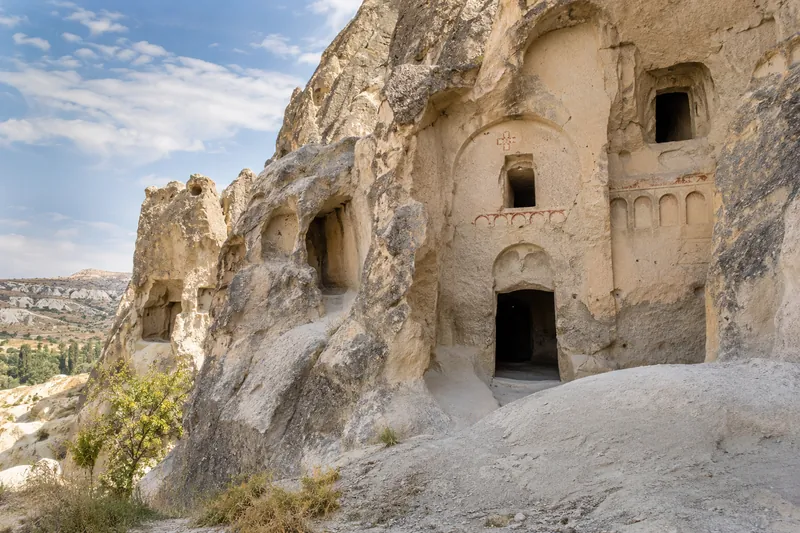
Monks carved homes, chapels and refectories into the rock because the volcanic tuff is soft enough to cut with hand tools yet hardens on exposure to air. UNESCO dates the first signs of monastic activity here to the 4th century, when small communities of hermits followed Basil’s teaching and lived in rock-cut cells.
Over time these hermits gathered into larger monastic settlements and troglodyte villages. Walking through Göreme, you will see refectories with long rock-cut tables and benches, kitchens blackened by smoke, and cells cut high into the cliffs. These details help visitors picture a working community, not just a collection of painted rooms.
Which churches should you see at the Göreme Open Air Museum?
The Göreme Open Air Museum is a former monastic complex with a dense cluster of painted churches, and it is the core of any Christian Cappadocia day. It opened to visitors in 1967 and is part of the UNESCO site “Göreme National Park and the Rock Sites of Cappadocia,” inscribed in 1985.
The Dark Church (Karanlık Kilise)
The Dark Church has the most vivid frescoes in Göreme, largely because so little light reaches them. It was later used as a pigeon house until the 1950s, and restorers spent 14 years cleaning the paintings. Its name probably comes from the small window in its narthex. Scenes include Christ Pantocrator, the Nativity, the Last Supper, the Betrayal of Judas, the Crucifixion and the Anastasis. The Dark Church needs a separate ticket in addition to the main museum ticket, and I always recommend paying it.
The Apple Church (Elmalı Kilise)
The Apple Church is a small cross-domed church carved with four pillars and a central dome showing Christ Pantocrator. The name may come from a reddish orb in the hand of the Archangel Michael, or from an apple tree that once grew nearby. In places, flaking paint reveals simpler earlier decoration underneath.
The Buckle Church (Tokalı Kilise)
The Buckle Church sits just outside the main gate and is covered by the main museum ticket. Many visitors walk straight past it, which is a mistake. It combines an older 10th-century church with a larger “New Church,” whose deep blue backgrounds were painted with lapis lazuli. Inscriptions name the patrons, Constantine and his son Leon, and the painter, Nikephoros. Its extensive cycle of the life of Christ rewards a slow visit.
Other churches worth a look include St. Barbara, with its red ochre geometric designs, and the Snake Church (Yılanlı Kilise), with Saints George and Theodore fighting the dragon and Constantine and Helena holding the True Cross.
Iconoclasm: how are the frescoes dated?
Iconoclasm explains why some Cappadocian churches carry only red crosses and geometric lines, while others are covered in figures. During the Byzantine Iconoclastic period (dated by UNESCO to 725 to 842), images of Christ and the saints were banned, and church decoration was reduced to symbols, mostly crosses.
After the restoration of icons in 843, monasteries commissioned rich figurative cycles. That is why most of what you see in Göreme belongs to the 10th and 11th centuries. Specialists date the paintings by style, by inscriptions naming donors, and by comparison with dated churches elsewhere.
Dates are still debated. UNESCO places the Tokalı Church in the 10th century and the Apple and Dark Churches at the end of the 12th to the beginning of the 13th century, while many art historians date the Apple and Dark Churches to the 11th century. A good guide will tell you which view rests on what evidence.
Ihlara Valley: churches along a river canyon
The Ihlara Valley is a river gorge cut by the Melendiz River, with around 50 rock-cut churches along its walls. It runs for about 14 to 15 kilometers between Ihlara village and Selime and reaches depths of up to about 150 meters. The valley sits in Aksaray Province, about 90 minutes’ drive southwest of Göreme.
From the main entrance near Ihlara, a long stairway of roughly 400 steps takes you down to the river. Close to the bottom are several churches you can visit in an hour or two:
- Ağaçaltı Church (Church under the Tree), also called the Daniel Pantonassa church, possibly from the 7th century.
- Yılanlı Church (Snake Church), known for its scenes of hell, from which it takes its name.
- Sümbüllü Church (Hyacinth Church), possibly 10th century.
- Pürenli Seki Church, with paintings from the 9th and 11th centuries.
Further along, near Belisırma, churches such as Direkli Kilise (10th century) and Kırkdamaltı, dated by inscription to 1283 to 1295, show that Christian worship continued here well into the Seljuk period. The river path is mostly level, and Belisırma, roughly halfway, has simple riverside restaurants for lunch. At the northern end, the rock-cut monastery complex at Selime is impressive for its scale. See our Ihlara Valley guide for walking options.
Underground cities: Kaymaklı and Derinkuyu
The underground cities were places of refuge, and in the Byzantine period they protected local Christians during Arab raids. Both Kaymaklı and Derinkuyu are included in the UNESCO listing.
Derinkuyu reaches a depth of about 85 meters and was greatly enlarged between roughly 780 and 1180. It had ventilation shafts, wells, stables, storerooms and large rolling stone doors that could seal each level from inside. Estimates suggest it could shelter thousands of people with their livestock. Kaymaklı has eight levels, of which four are lit and open to visitors, and it has been open to the public since 1964. Both have a church or chapel.
The passages are low and narrow. If you are claustrophobic or have back or knee problems, I suggest visiting only the upper levels or skipping this stop.
Can visitors attend Sunday worship in Cappadocia?
There is no regular, publicly scheduled Sunday service for visitors in the Göreme area that I can confirm, so plan for private devotion rather than a parish Mass or service. The rock churches are protected museum sites, and organized services inside them are not routine.
The Ecumenical Patriarchate does occasionally celebrate the Divine Liturgy in historic Cappadocian churches on special pilgrimages, but these are not on a fixed calendar. For church groups, quiet prayer and short readings in the valleys and outdoor spaces work well. If your group hopes to hold a formal service, contact us well in advance and we will tell you honestly what is possible. Our church group page has more detail.
How to plan a faith-focused day
Most faith groups need two days in Cappadocia to see the main Christian sites without rushing. Here is a sample plan:
| Time | Day 1: Göreme area | Day 2: South and west |
|---|---|---|
| Early morning | Göreme Open Air Museum at opening, Dark Church first | Drive to Ihlara Valley |
| Late morning | Tokalı Church, then a valley walk | Ihlara churches and river walk |
| Lunch | Göreme or Avanos | Belisırma by the river |
| Afternoon | Readings on Basil and the Creed at a viewpoint | Selime Monastery, then Kaymaklı or Derinkuyu on the way back |
As of October 2026 the Ministry lists the Göreme Open Air Museum as open daily from 08:00 to 17:45, with the ticket office closing at 17:15. Arriving at opening time gives you the Dark Church before the queues build. Wear shoes with grip, carry water, and bring a light layer for the underground cities, which stay cool.
For a wider overview of the region, see our Cappadocia guide. Cappadocia combines well with Ephesus and the Seven Churches on the 10-Day Private Seven Churches Tour with Istanbul and Cappadocia, or you can shape your own days through Build your trip.
Sources
- UNESCO World Heritage Centre: Göreme National Park and the Rock Sites of Cappadocia
- Ministry of Culture and Tourism: Göreme Open Air Museum
- Turkish Museums: Kaymaklı Underground City
- Cappadocian Fathers (overview)
- Churches of Göreme (overview)
- Ihlara Valley (overview)
- Derinkuyu Underground City (overview)
FAQ
Who were the Cappadocian Fathers?
They were Basil the Great, Bishop of Caesarea (modern Kayseri); his younger brother Gregory of Nyssa; and their friend Gregory of Nazianzus, briefly Archbishop of Constantinople. In the 4th century they defended the doctrine of the Trinity against Arianism and shaped the Council of Constantinople in 381. Basil's writings on monastic life influenced Eastern monasticism.
Is the Dark Church included in the Göreme Open Air Museum ticket?
No. The Dark Church (Karanlık Kilise) requires a separate ticket on top of the main Göreme Open Air Museum ticket. It is worth it, because its frescoes are unusually well preserved and vivid in color. The Tokalı (Buckle) Church, just outside the main gate, is covered by the main ticket.
Why do some Cappadocian churches have only crosses painted on the walls?
Many of those simple red crosses and geometric patterns reflect the Iconoclastic period, which UNESCO dates to 725 to 842, when images of Christ and the saints were banned. After icons were restored in 843, monasteries commissioned full figurative paintings, which is why most surviving frescoes date from the 10th and 11th centuries.
Which underground city is better, Kaymaklı or Derinkuyu?
Both show how local Christians sheltered during Byzantine-era raids. Derinkuyu is deeper, at about 85 meters, with a church on its lowest level. Kaymaklı is broader, with four of its eight levels open to visitors. Choose one; seeing both repeats much of the experience. Both have low, narrow passages.
How many days do I need for Christian Cappadocia?
Two full days is a comfortable minimum. Spend one day on the Göreme Open Air Museum, the Dark Church, the Tokalı Church and a valley walk, and a second on the Ihlara Valley churches, Selime Monastery and one underground city. Three days allows a slower pace and time for a balloon flight.
Summarize this post with an AI assistant
Private tours that go there
Every tour runs with your own licensed guide and vehicle, and every one can be adjusted.
9-Day Private Cappadocia & Mesopotamia Tour: Göbekli Tepe, Nemrut & Mardin
Cappadocia · Ihlara Valley · Gaziantep · Şanlıurfa · Harran · Göbekli Tepe
Includes: 4-star hotels · Domestic flights · Entrance fees
12-Day Private Turkey Tour: Istanbul, Cappadocia, Ephesus & Pamukkale
Istanbul · Cappadocia · Ihlara Valley · Ephesus · Priene, Miletus & Didyma · Aphrodisias
Includes: 4-star hotels · Domestic flights · Entrance fees
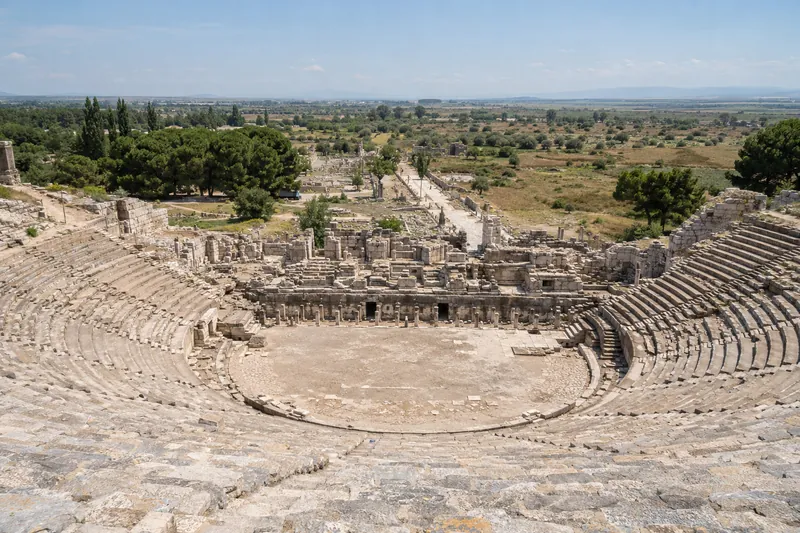
13-Day Private Turkey Tour: Cappadocia, Ephesus, Pergamon, Pamukkale & Istanbul
Cappadocia · Ihlara Valley · Ephesus · Pergamon · Kuşadası · Pamukkale
Includes: 4-star hotels · Domestic flights · Entrance fees
More from the blog
All articles
Turkey Itinerary Mistakes We See Most Often and How to Avoid Them
Ten common Turkey itinerary mistakes, from driving to Cappadocia to Tuesday at Topkapı, and the simple fix for each one.
 Evren SatırFounder, Turkey Itineraries · 7 min read
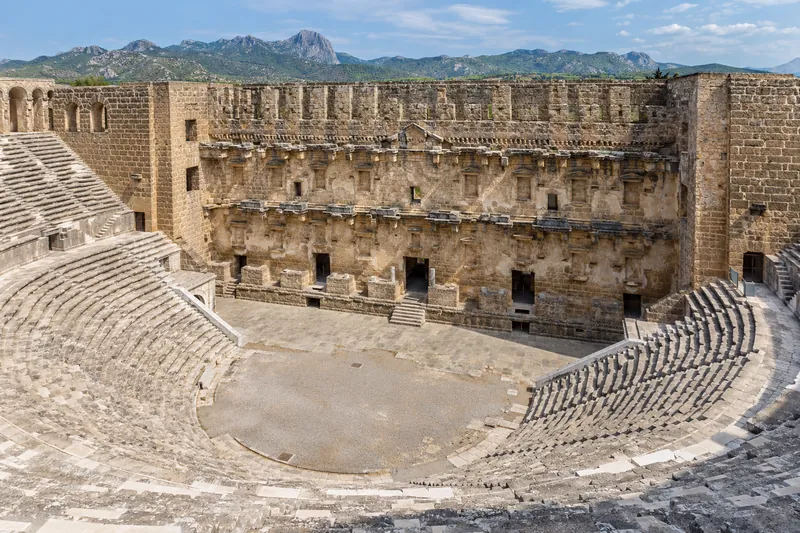
Antalya’s Ancient Cities in One Day: Perge, Aspendos and Side
The right order, driving times, October 2026 tickets and what to skip on a day trip to Perge, Aspendos and Side from Antalya.
 Osman DemirLicensed guide · 6 min read
Visiting Konya: Rumi’s Tomb, the Sema Ceremony and Seljuk Sites
Rumi's tomb, a real Saturday sema, Seljuk tilework and a plate of etli ekmek: how to spend a night in Konya between Cappadocia and Pamukkale.
Bahar ÖzdemirLicensed guide · 7 min read