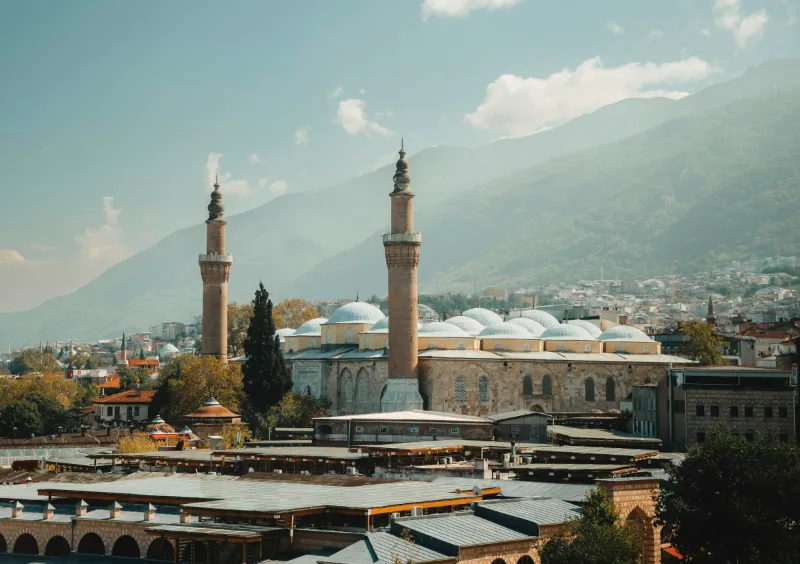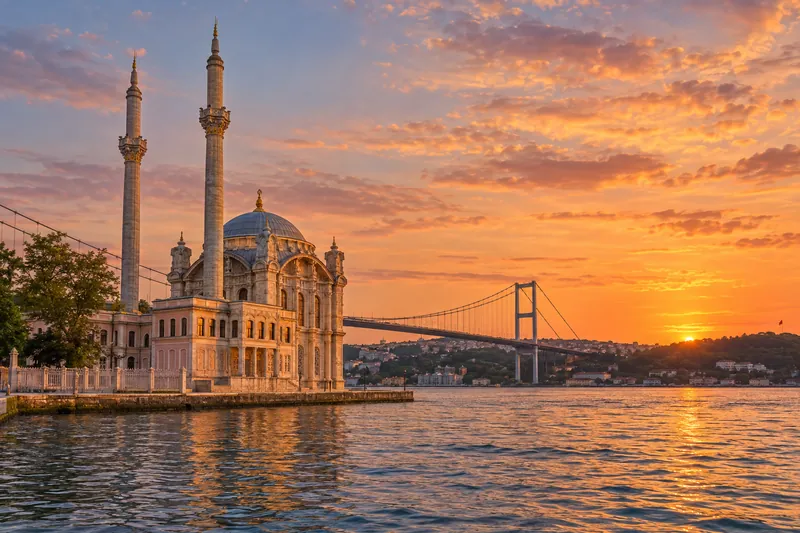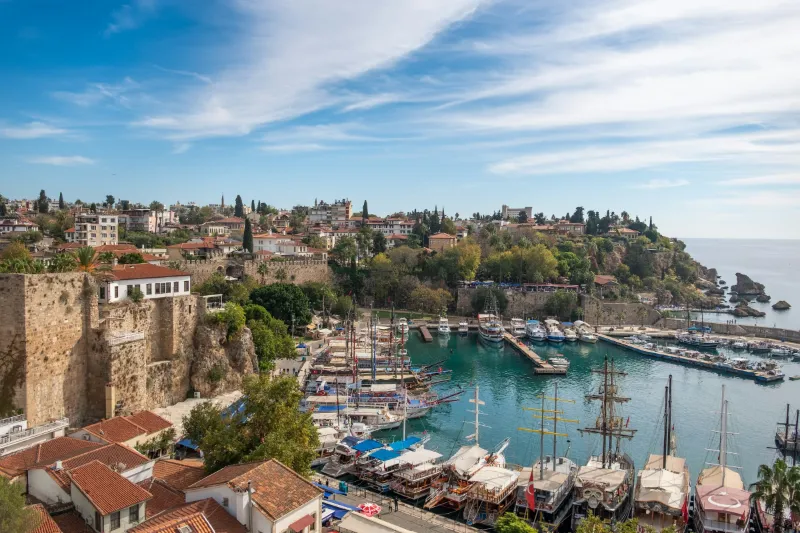
4-Day Private Istanbul Tour with Guide, Van & Optional Hotel
Istanbul
Guide and private vehicle included
For 2 travelers
$310USD / person
From $105 for larger groups
Free cancellation

 By the Turkey Itineraries team · Reviewed by Kübra, licensed guide · Updated October 2026
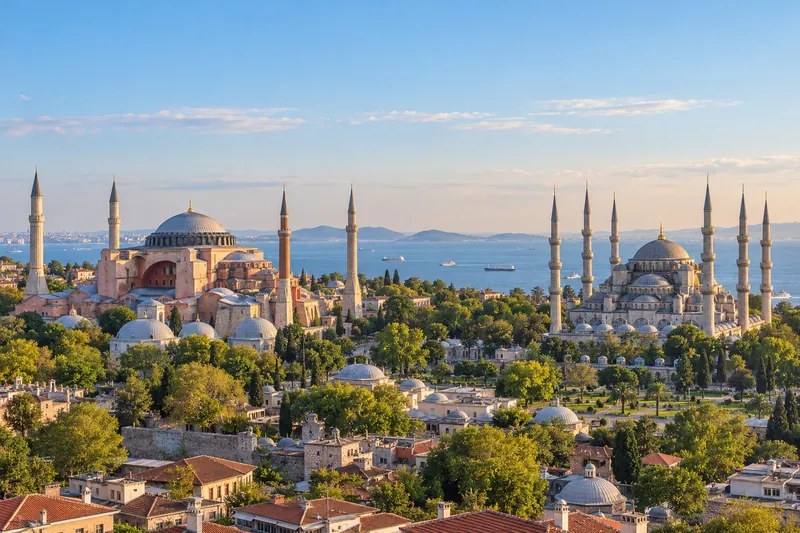
Quick answer: Istanbul is Turkey's largest city, split by the Bosphorus strait between Europe and Asia. Its historic core, a UNESCO World Heritage Site, holds Hagia Sophia, Topkapı Palace and the Blue Mosque. Plan two to three full days. April to early June and September to October are the most comfortable months. Most Turkey itineraries start or end here.
14 tours · every one with your own guide and vehicle
Istanbul
Guide and private vehicle included
Istanbul
Includes: 4-star hotels · Entrance fees
Istanbul · Cappadocia
Includes: 4-star hotels · Domestic flights · Entrance fees
Istanbul · Antalya · Aspendos · Pamukkale
Includes: 4-star hotels · Domestic flights · Entrance fees
Istanbul · Cappadocia · Ephesus · Pamukkale · Kuşadası
Includes: 4-star hotels · Domestic flights · Entrance fees
Istanbul · Cappadocia · Ephesus · Pamukkale · Kuşadası
Includes: 5-star hotels · Domestic flights
| Where | Northwest Turkey, on both banks of the Bosphorus |
|---|---|
| Getting there | Istanbul Airport (IST) on the European side, nonstop or with one connection from the US |
| Time needed | 2 to 3 full days |
| Best time to visit | April to early June and September to October |
| UNESCO World Heritage | Historic Areas of Istanbul (1985) |
| Our private tours | 14 of our private tours include Istanbul, starting from 4 days |
Summarize this guide with an AI assistant
Istanbul sits in northwest Turkey on both banks of the Bosphorus, the strait that links the Black Sea to the Sea of Marmara. Most US travelers arrive at Istanbul Airport (IST) on the European side, either nonstop or with one connection.
The historic sights cluster on the Historic Peninsula (Sultanahmet and Fatih), on the European side. From Istanbul Airport, plan on roughly an hour by car to Sultanahmet, longer at rush hour. Sabiha Gökçen Airport (SAW), on the Asian side, mainly handles domestic and regional flights and can take longer in traffic.
Within the old city, the main sights are walkable, and the T1 tram runs through Sultanahmet. On a private tour, your driver handles transfers and drops you close to each entrance.
Plan two to three full days for Istanbul. Two days covers the Historic Peninsula and a Bosphorus cruise at a steady pace; a third day lets you add Dolmabahçe Palace, Chora and the Fener-Balat neighborhoods without rushing.
Here is why. Hagia Sophia, the Blue Mosque, Topkapı Palace and the two Byzantine cisterns sit within a short walk of each other, but Topkapı alone deserves three hours, and mosque visits pause at prayer times. That fills Day 1. Day 2 usually covers the Grand Bazaar, the Spice Bazaar and the Bosphorus. Day 3 is for Dolmabahçe, Chora and Fener-Balat, or Galata and Beyoğlu in the evening.
With only one day, focus on Hagia Sophia, the Blue Mosque, one cistern and either Topkapı or the Grand Bazaar. Note the weekly closures: Topkapı is closed on Tuesdays, Dolmabahçe on Mondays and the Grand Bazaar on Sundays.
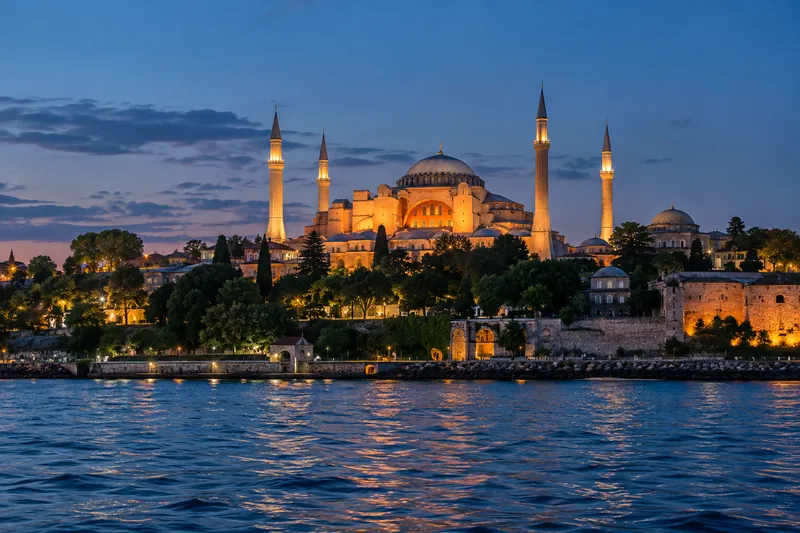
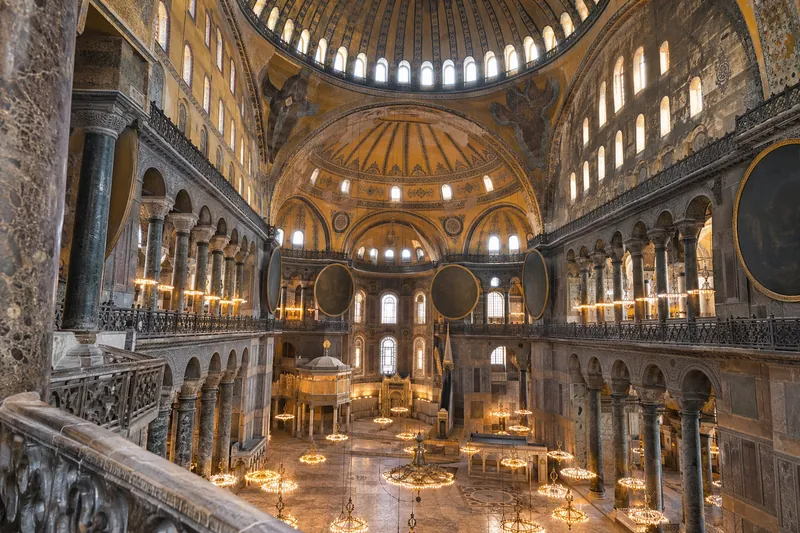
Hagia Sophia was completed in 537 under Emperor Justinian, designed by Anthemios of Tralles and Isidoros of Miletus. It served as a cathedral, then a mosque from 1453, a museum from 1934, and again a mosque since 2020.
Since January 2024, foreign visitors enter on a separate, ticketed route that leads up the original ramp to the upper galleries. From there you look down into the vast domed hall and see the gallery mosaics up close, including the Deësis panel of Christ with Mary and John the Baptist. The ground floor is reserved for worship. Expect a security line at peak times, and plan around the Friday noon prayer, when tourist visits stop for a couple of hours.
The Sultan Ahmed Mosque, built in the early 17th century for Sultan Ahmed I, stands across the square from Hagia Sophia. It is known for its six minarets and the blue İznik tiles that give it its popular name. It reopened in 2023 after a long restoration.
Entry is free. Visitors use a dedicated entrance, remove their shoes and carry them in a bag. The mosque closes to visitors during each of the five daily prayers, and for longer around Friday midday. Early morning is usually quietest. Shoulders and knees must be covered, and women cover their hair; scarves are provided at the door.
Topkapı was the main residence and administrative center of the Ottoman sultans from the 15th century until the mid-19th century. It is a series of courtyards and pavilions on the tip of the peninsula, with views over the Bosphorus and the Golden Horn.
Inside you will find the Imperial Treasury, the Sacred Relics chamber, the palace kitchens, the Imperial Council hall and the Harem, the private quarters of the sultan's family. The combined ticket also covers Hagia Irene, a 6th-century Byzantine church in the first courtyard. Allow at least three hours. The palace is closed on Tuesdays.
The Basilica Cistern is a 6th-century underground reservoir built under Justinian to store water for the Great Palace area. Hundreds of marble columns rise from the water in long rows, and two reused Medusa heads sit at the base of columns in the far corner.
Walkways keep you above the water, and the lighting is low, so watch your step. In June 2026, management of the cistern passed from the Istanbul Metropolitan Municipality to Türkiye's Directorate General of Foundations, and ticket prices and hours were being revised. Check current details before you go.
The Cistern of Theodosius, known in Turkish as Şerefiye Sarnıcı, is a smaller Byzantine cistern a few minutes' walk from Sultanahmet Square. Its official site attributes it to the reign of Theodosius II (408 to 450) and gives an area of over 960 square meters, making it one of the oldest water structures on the Historic Peninsula.
It was restored and opened to visitors in 2018. The visit takes 20 to 30 minutes and pairs well with the Basilica Cistern if you want to compare two Byzantine water systems. It is also a useful alternative when lines at the larger cistern are long.
The Grand Bazaar (Kapalıçarşı) is a covered market of vaulted streets and inns that has traded since the 15th century. You will find carpets, ceramics, lamps, leather, jewelry and textiles. Bargaining is normal for many goods. It is closed on Sundays and on the first days of religious holidays.
The Spice Bazaar (Mısır Çarşısı), near Eminönü and the ferry docks, is smaller and focused on spices, dried fruit, Turkish delight, tea and nuts. A walk between the two through the busy wholesale streets around Tahtakale shows you a working side of the old city.
The Bosphorus is the strait that divides Istanbul between Europe and Asia. A boat ride along it is the easiest way to see the city's scale: Ottoman palaces, wooden waterfront mansions (yalı), Rumeli Fortress and the suspension bridges.
You can take a public ferry, a shared cruise from Eminönü, or a private boat. Most cruises run 90 minutes to two hours. Late afternoon light is good for photos, and a light jacket helps on the water outside summer.
Across the Golden Horn, Galata and Beyoğlu form the 19th-century European quarter of the city. Galata Tower, a medieval Genoese tower, offers a panoramic view from its upper gallery. From there, streets climb toward İstiklal Avenue, a long pedestrian street with historic arcades, churches, bookshops and cafés.
It works well for an evening walk and dinner. Expect crowds on İstiklal on weekends.
The Chora (Kariye) is a Byzantine church whose early 14th-century mosaics and frescoes are among the finest surviving late Byzantine art, including the Anastasis fresco in the side chapel. It reopened as a mosque in 2024, with a ticketed visitor route for foreign visitors. It closes to tourists on Fridays.
Nearby, the Fener and Balat neighborhoods along the Golden Horn have colorful row houses, the Ecumenical Patriarchate, the Bulgarian Iron Church and the red-brick Phanar Greek school. It is a good half-day walk combined with Chora.
Dolmabahçe Palace, on the European shore of the Bosphorus, was built in the mid-19th century and replaced Topkapı as the main residence of the sultans. It mixes European styles with Ottoman layout, with a large ceremonial hall and crystal chandeliers. Mustafa Kemal Atatürk died here in 1938.
Visits are guided in small groups, and the standard ticket covers the Selamlık (state rooms), the Harem and the Painting Museum. The palace is closed on Mondays. Allow about two hours.
Some Istanbul sites price foreign-visitor tickets in euros and charge the lira equivalent; others, such as the National Palaces, publish prices in Turkish lira. Prices change often, so confirm close to your trip.
| Site | Ticket for foreign visitors | Hours | Notes |
|---|---|---|---|
| Hagia Sophia (upper gallery route) | €25 | From about 9:00; closing time varies | Ground floor is for worship. Tourist visits pause around Friday noon prayer. |
| Blue Mosque | Free | From early morning to evening | Closed to visitors during the five daily prayers; longer on Friday midday. |
| Topkapı Palace (combined: palace, Harem, Hagia Irene) | 2,750 TL | Ticket office 09:00 to 17:00 | Closed Tuesdays. Harem only or Hagia Irene only: 1,050 TL each. |
| Dolmabahçe Palace (Selamlık, Harem, Painting Museum) | 2,000 TL | Ticket office 09:00 to 17:00 | Closed Mondays. Combo palace tickets from 2,750 TL. |
| Basilica Cistern | Transferred to the Directorate General of Foundations in June 2026; pricing under revision. | ||
| Cistern of Theodosius (Şerefiye) | 900 TL | Daily 10:00 to 18:00 | Short visit, 20 to 30 minutes. |
| Chora (Kariye Mosque) | €20 | About 9:00 to 18:00 | Closed to tourist visits on Fridays. |
| Grand Bazaar | Free | Monday to Saturday, daytime | Closed Sundays and first days of religious holidays. |
Museum Pass Istanbul: The Ministry of Culture and Tourism sells a five-day pass for state museums. It does not cover Hagia Sophia's visitor route, the Basilica Cistern, Dolmabahçe or Chora. Topkapı is now managed by the National Palaces administration, so confirm whether the pass still includes it before buying. Current pass price:.
Short answer: April to early June and September to October offer mild weather and long days. July and August are hot and busy. Winter is quieter and cheaper but often damp and gray.
| Months | Weather | Crowds | Notes |
|---|---|---|---|
| March | Cool, changeable, some rain | Low to moderate | Pack layers. |
| April to May | Mild and pleasant | Moderate to high | Tulip season in city parks in April. |
| June | Warm, long days | High | Book key sights early in the day. |
| July to August | Hot and humid | Highest | Start early, rest midday, use the Bosphorus breeze. |
| September to October | Warm to mild | Moderate to high | Comfortable for walking and boat trips. |
| November to February | Cool to cold, rain, occasional snow | Low | Short days; indoor sights shine. |
Religious holidays (Ramadan Feast and Sacrifice Feast) shift each year and can close the Grand Bazaar and raise domestic crowds.
Plan your Sultanahmet day around closures and prayer times, not just geography. Start at Hagia Sophia or the Blue Mosque at opening, move to Topkapı before mid-morning tour groups arrive, and keep the cisterns for the hottest part of the afternoon, since they stay cool underground. Never schedule Topkapı on a Tuesday or the Grand Bazaar on a Sunday.
If you only need one experience in Istanbul rather than a full private tour, our sister sites, run by the same Travelpedia team, book them directly:
Two to three full days is enough for most first-time visitors. Two days covers Hagia Sophia, the Blue Mosque, Topkapı Palace, a cistern, the bazaars and a Bosphorus cruise. A third day adds Dolmabahçe Palace, Chora and the Fener-Balat neighborhoods at a relaxed pace, with time for Galata and Beyoğlu in the evening.
As of October 2026, foreign visitors pay €25, charged in Turkish lira, for the upper gallery visitor route. The ground floor is a working prayer hall and is not part of the tourist route. Tourist visits pause around the Friday noon prayer, so plan another day or time if you can.
Yes, the Blue Mosque is free. Visitors use a separate entrance, remove their shoes and dress modestly, with shoulders and knees covered and women's hair covered. It closes to visitors during each of the five daily prayers and for a longer period around Friday midday, so early morning is the easiest time.
Topkapı Palace is closed on Tuesdays. On other days, the ticket office is open from 09:00 to 17:00. As of October 2026, the combined ticket for foreign visitors, covering the palace, the Harem and Hagia Irene, costs 2,750 Turkish lira. Allow at least three hours for a full visit.
Yes, if you enjoy Byzantine history or want a shorter, calmer alternative to the Basilica Cistern. The Cistern of Theodosius (Şerefiye) dates to the 5th century and sits a few minutes from Sultanahmet Square. A visit takes 20 to 30 minutes and fits easily between larger sights.
Istanbul sits in northwest Turkey on both banks of the Bosphorus, the strait that links the Black Sea to the Sea of Marmara. Most US travelers arrive at Istanbul Airport (IST) on the European side, either nonstop or with one connection. The historic sights cluster on the Historic Peninsula (Sultanahmet and Fatih), on the European side.
April to early June and September to October offer mild weather and long days. July and August are hot and busy.
Yes. It is on the UNESCO World Heritage List as “Historic Areas of Istanbul”, inscribed in 1985.
Several of our private tours include Istanbul, starting from 4 days. They are listed at the top of this page with routes and prices per person.
Tell us your dates, who is traveling and what you want to see. The Turkey Itineraries team replies within a few hours with a private itinerary and a clear price.
We use Google Analytics cookies to understand which pages help travelers plan their trip. No advertising cookies. Privacy policy