Gallipoli at a glance
| Where | The peninsula on the northern shore of the Dardanelles, Çanakkale Province |
|---|
| Getting there | About 5 hours by road from Istanbul along the Sea of Marmara |
|---|
| Time needed | 1 full day for the Anzac sector, Chunuk Bair and the southern memorials |
|---|
| Best time to visit | April, May, September and October |
|---|
| Our private tours | 2 of our private tours include Gallipoli, starting from 11 days |
|---|
Summarize this guide with an AI assistant
Where is Gallipoli and how do you get there?
Gallipoli (Gelibolu in Turkish) is the long peninsula that forms the northern shore of the Dardanelles strait in Çanakkale Province, northwest Turkey. From Istanbul, the drive takes about five hours.
Most visitors drive from Istanbul along the Sea of Marmara. You can reach the battlefields directly on the European side, or cross the 1915 Çanakkale Bridge to the Asian side and stay in Çanakkale city. The memorials are spread over many miles, so you need a vehicle.
Car ferries link Çanakkale with Eceabat on the peninsula. The crossing takes about 25 minutes and runs frequently through the day. Many itineraries use the ferry one way and the bridge the other.
How much time do you need?
One full day covers the main Anzac sector, Chunuk Bair and the southern memorials at a steady pace. If you have a family connection to a soldier, or want to see both the Anzac area and Cape Helles without rushing, plan a day and a half.
A day trip from Istanbul is possible but long, with about ten hours of driving. A better plan is to overnight in Çanakkale or Eceabat, see Gallipoli on one day, then visit Troy the next morning on your way south toward Pergamon or Ephesus.
What to see in Gallipoli
The 1915 campaign in brief
The Gallipoli campaign was an Allied attempt in 1915 to force the Dardanelles, knock the Ottoman Empire out of the First World War, and open a sea route to Russia. It failed, and both sides paid a heavy price.
A British and French naval attack on the strait was turned back on 18 March 1915. Land invasions followed on 25 April 1915: British and French troops at Cape Helles in the south, and Australian and New Zealand Army Corps (ANZAC) troops north of Gaba Tepe. Months of trench warfare followed. A major Allied offensive in August, including Lone Pine and Chunuk Bair, did not break through. The Allies evacuated in December 1915 and January 1916.
Each nation remembers it differently. For Turks, the defense of Çanakkale is a defining victory, and it raised the profile of Lieutenant Colonel Mustafa Kemal, later Atatürk. For Australians and New Zealanders, Gallipoli is central to national identity, marked every year on Anzac Day. For Britain, Ireland and France, it was one costly front among many. New Zealand's official history site gives about 2,779 New Zealand deaths, more than 8,700 Australian deaths, about 44,000 Allied deaths in total, and Ottoman losses of around 87,000.
Anzac Cove and Arıburnu
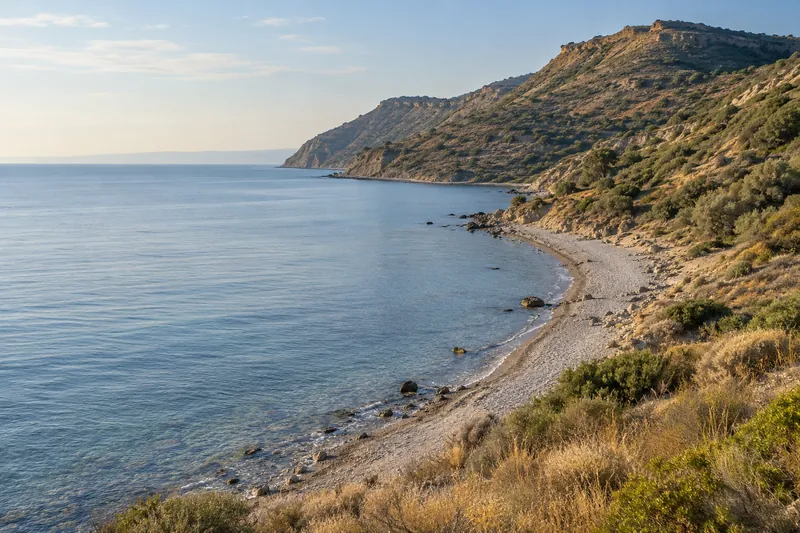
Anzac Cove is the small beach north of Gaba Tepe where Australian and New Zealand troops landed at dawn on 25 April 1915. It is quiet and narrow, and seeing how steep the ridges rise behind it explains much of what followed.
Nearby, the Arıburnu cemetery sits right above the water. A memorial stone carries the 1934 message attributed to Atatürk, addressed to the mothers of the fallen soldiers, saying their sons now "lie in our bosom." Just north along the coast is North Beach, home to the Anzac Commemorative Site where the Anzac Day dawn service is held.
Lone Pine
Lone Pine is the main Australian memorial on Gallipoli, set on the ridge above Anzac Cove. The cemetery and memorial stand on ground where the Battle of Lone Pine was fought in August 1915.
The battle was a diversion during the August offensive and turned into days of close trench fighting. According to Australia's Department of Veterans' Affairs, seven of the nine Victoria Crosses awarded to Australians at Gallipoli were for actions at Lone Pine. The memorial lists Australians and New Zealanders who died in the Anzac area and have no known grave. Today a single pine grows in the cemetery, and the site hosts the Australian service on Anzac Day.
The ridge road: Johnston's Jolly, the 57th Regiment and The Nek
The road from Lone Pine to Chunuk Bair follows the old front line, and in places the trenches were only yards apart. Driving it slowly is one of the clearest ways to understand the campaign.
Along the way you pass Johnston's Jolly, Quinn's Post and The Nek, each with a cemetery or marker. The 57th Infantry Regiment Memorial and Cemetery is a key Turkish site. The regiment fought on 25 April under Mustafa Kemal's command and suffered very heavy losses. A statue of a veteran with his granddaughter stands nearby. Expect Turkish school groups here, especially on spring weekdays.
Chunuk Bair
Chunuk Bair (Conkbayırı) is the high ground near the top of the ridge and the main New Zealand memorial site. It offers wide views over the battlefield and the Aegean coast.
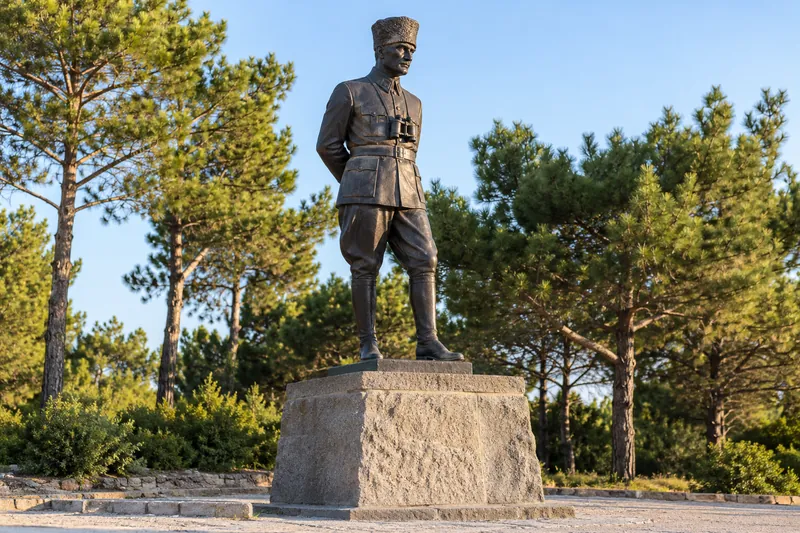
On 8 August 1915, New Zealand's Wellington Battalion captured the summit during the August offensive. Ottoman forces, led by Mustafa Kemal, retook it two days later. Today you find the New Zealand Memorial, a cemetery, reconstructed trenches and a large statue of Atatürk. The New Zealand service is held here on Anzac Day.
Çanakkale Martyrs' Memorial and Cape Helles
The Çanakkale Martyrs' Memorial (Şehitler Abidesi) is the main Turkish national memorial, at the southern tip of the peninsula overlooking Morto Bay. It stands 41.7 meters tall and opened in 1960.
The memorial is a huge four-legged arch visible from the strait. Nearby is a symbolic cemetery honoring Ottoman soldiers. At Cape Helles, the British Helles Memorial lists Commonwealth soldiers with no known grave, and the French Military Cemetery near Morto Bay is the main French site. The southern sector is about 45 minutes' drive from Anzac Cove, so it adds time. If your day is short, ask your guide whether Helles or the Kabatepe center fits your interests better.
Çanakkale Epic Presentation Center (Kabatepe)
The Çanakkale Epic Presentation Center (Çanakkale Destanı Tanıtım Merkezi) is a modern underground museum at Kabatepe with a multimedia show about the campaign. Many English-language sources still call it the Kabatepe Simulation Center.
According to the Ministry of Culture and Tourism, the show runs through 11 themed rooms with audio available in 7 languages through headphones. Plan about an hour. There is also a separate exhibition hall with uniforms, equipment and personal items from soldiers. It is a helpful introduction before you walk the ground. It is closed on Tuesdays.
Çanakkale city and the Trojan Horse
Çanakkale is the lively university town on the Asian shore of the Dardanelles and the usual base for both Gallipoli and Troy. It has a long waterfront promenade, seafood restaurants and a choice of hotels.
On the waterfront you will find the large wooden horse used in the 2004 Hollywood film Troy, which was brought to the city after filming. The Ottoman-era Çimenlik Castle, home to the Naval Museum, is a short walk away, and across the water you can see Kilitbahir Castle on the European side.
Tickets and opening hours (as of October 2026)
The battlefields, cemeteries and outdoor memorials are open-air and free to visit. Only enclosed museums and the Kabatepe center charge admission.
| Site |
Ticket for foreign visitors |
Hours |
Notes |
| Anzac Cove, Lone Pine, Chunuk Bair, 57th Regiment, Martyrs' Memorial, other cemeteries |
Free |
Open-air, accessible daily |
Managed by the Gallipoli Historical Site authority and the Commonwealth War Graves Commission |
| Çanakkale Epic Presentation Center (Kabatepe), multimedia show |
250 TL listed on muze.gov.tr; foreign visitor price |
09:00 to 17:00, last tickets 16:15 |
Closed Tuesdays |
| Çanakkale Epic Presentation Center, exhibition hall |
100 TL listed on muze.gov.tr; foreign visitor price |
Same as above |
Separate ticket |
| Çanakkale to Eceabat ferry |
Small foot-passenger fare; vehicle fares vary |
Frequent daily crossings, about 25 minutes |
Operated by GESTAŞ |
Prices change, sometimes more than once a year, so confirm before you travel. Turkey's Ministry of Culture and Tourism has already announced new museum prices for 2027.
Best time to visit
April, May, September and October are the most comfortable months for walking the battlefields. Summer is hot and exposed, and winter brings wind, rain and short days.
| Months |
Weather |
Crowds |
Notes |
| March to early April |
Cool, often windy, some rain |
Busy around 18 March (Turkish commemoration) |
18 March is Çanakkale Victory Day |
| Late April |
Mild days, cold nights |
Very busy around 25 April |
Anzac Day services, plan months ahead |
| May to June |
Warm and pleasant |
Moderate, many Turkish school groups on weekdays |
Good walking weather |
| July to August |
Hot, little shade on the ridges |
Moderate, Turkish holidaymakers |
Start early, carry water |
| September to October |
Warm, settled |
Lighter |
One of the easiest times to visit |
| November to February |
Cold, wet, strong wind |
Quiet |
Short daylight, some cafés closed |
Planning for Anzac Day (25 April)
The Anzac Day dawn service at Gallipoli is held every 25 April at the Anzac Commemorative Site on North Beach, followed later in the morning by the Australian service at Lone Pine and the New Zealand service at Chunuk Bair. Attendance requires a free pass, and you should register as early as you can.
Registration is handled through the official Anzac Day services ticketing site run for the Australian and New Zealand governments. For the 2026 services, the New Zealand Defence Force announced that registration opened on 3 December 2025.
Plan for these realities:
- Attendees arrive on the evening of 24 April and spend the night outdoors at the site. Nights are cold. Bring warm layers, a hat, gloves and something to sit on.
- Expect bag security checks. Alcohol and camping gear are not allowed.
- Vehicles cannot park near the site. Expect long walks in the dark on rough ground.
- After the dawn service, the walk up to Lone Pine is steep, and Chunuk Bair is roughly another hour uphill.
- Hotels in Çanakkale and Eceabat fill up early for this week.
Guide's tip
Visit the Kabatepe center first, then drive the ridge road from Anzac Cove up to Chunuk Bair in the order the fighting moved. If you are looking for a specific soldier, search the Commonwealth War Graves Commission database before you travel and bring the cemetery name and plot reference, so your guide can take you straight to the grave.
Practical tips
- Wear sturdy walking shoes. Paths around cemeteries and trenches are uneven and can be muddy.
- Bring a hat, sunscreen and water. There is little shade on the ridges and only a few cafés on the peninsula.
- These are war graves. Speak quietly, stay on paths and do not sit on headstones or memorial walls.
- There is no formal dress code, but modest clothing is respectful, especially at Turkish memorials where ceremonies are common.
- Carry some Turkish lira for cafés and restrooms.
- Photography is allowed at outdoor memorials. Be discreet when other visitors are paying respects.
- Accessibility is mixed. Main memorials have parking close by, but trenches and some cemeteries involve slopes and steps.
Common myths about Gallipoli
- Myth: Only Australians and New Zealanders fought at Gallipoli. Fact: British, French, Indian and Newfoundland troops also fought on the Allied side, and the Ottoman Army defended the peninsula. All sides suffered heavy losses.
From our guides' blog
Sources
- Çanakkale Epic Presentation Center, Republic of Türkiye Ministry of Culture and Tourism (muze.gov.tr)
- Gallipoli in brief, NZHistory, New Zealand Ministry for Culture and Heritage
- Gallipoli Campaign 1915, Anzac Portal, Australian Department of Veterans' Affairs
- Anzac Day, Gallipoli, Türkiye, Australian Department of Veterans' Affairs
- Commemorating Anzac Day 2026, DVA Vetaffairs
- Registration opens for 2026 Gallipoli services in Türkiye, New Zealand Defence Force
- Çanakkale Şehitler Abidesi, Küre Ansiklopedi
- Çanakkale Martyrs' Cemeteries and Museums 2026 entry fees (Turkish)
- Çanakkale to Eceabat ferry schedule, GESTAŞ routes
- Kültür ve Turizm Bakanlığı 2027 müze giriş ücretlerini açıkladı, Turizm Aktüel
- Commonwealth War Graves Commission, Find War Dead
FAQ
How far is Gallipoli from Istanbul?
Gallipoli is about five hours from Istanbul by road. The drive follows the Sea of Marmara coast to the peninsula. A same-day round trip means roughly ten hours in a vehicle, so most travelers stay a night in Çanakkale or Eceabat and continue to Troy the next day.
Is Gallipoli worth visiting for Americans?
Yes, if you are interested in history. Gallipoli is one of the most significant battlefields of the First World War, and its memorials show how Turks, Australians, New Zealanders, British and French remember the same campaign. A good guide makes the landscape and the story easy to follow, even without a family connection.
Do you need tickets to visit the Gallipoli battlefields?
No. The cemeteries, memorials and battlefield sites are open-air and free. You only pay for enclosed sites, such as the Çanakkale Epic Presentation Center at Kabatepe and the museums in Çanakkale city.
What is the Anzac Day dawn service and can anyone attend?
The dawn service on 25 April honors those who served at Gallipoli and is held at the Anzac Commemorative Site on North Beach. Attendance is free but requires a pass from the official Anzac Day ticketing website. Visitors of any nationality may register, but you must plan for an outdoor overnight wait.
What is the best time of year to visit Gallipoli?
April, May, September and October offer the most comfortable walking weather. Summer is hot and exposed, while winter is cold, wet and windy. Avoid the week around 25 April unless you are attending Anzac Day, since crowds and hotel demand are very high.
How long do you need at Gallipoli?
Plan one full day to see Anzac Cove, Lone Pine, Chunuk Bair and the Martyrs' Memorial. Add half a day if you want both the Anzac area and Cape Helles at a slower pace, or if you are visiting a particular grave.
How do you get to Gallipoli?
Gallipoli (Gelibolu in Turkish) is the long peninsula that forms the northern shore of the Dardanelles strait in Çanakkale Province, northwest Turkey. From Istanbul, the drive takes about five hours. Most visitors drive from Istanbul along the Sea of Marmara.
Which private tours include Gallipoli?
Several of our private tours include Gallipoli, starting from 11 days. They are listed at the top of this page with routes and prices per person.