Ephesus at a glance
| Where | 3 km (2 miles) outside Selçuk, İzmir Province, western Turkey |
|---|
| Getting there | İzmir Adnan Menderes Airport (ADB), about an hour's drive; cruise ships dock at Kuşadası |
|---|
| Time needed | 2.5 to 3 hours for the ancient city, plus about 45 minutes for the Terrace Houses |
|---|
| Best time to visit | April, May, late September and October |
|---|
| UNESCO World Heritage | Ephesus (2015) |
|---|
| Our private tours | 11 of our private tours include Ephesus, starting from 5 days |
|---|
Summarize this guide with an AI assistant
Where is Ephesus and how do you get there?
Ephesus sits about 2 miles (3 km) outside Selçuk in İzmir Province, western Turkey. Most travelers arrive by flying into İzmir Adnan Menderes Airport (ADB) or by cruise ship into Kuşadası.
- From İzmir Airport (ADB): roughly a one-hour drive south on the highway. There are frequent domestic flights from Istanbul (about 1 hour 15 minutes in the air).
- From Kuşadası cruise port: about 20 to 30 minutes by road. If your ship is in port for one day, you can fit the ancient city, the Terrace Houses and one more site, but not everything on this page.
- From Pamukkale: about 3 hours by road.
Selçuk is the practical base. The Ephesus Museum, the Basilica of St. John and the Temple of Artemis are all in or beside town, and the House of the Virgin Mary is a short drive up Bülbül Mountain.
How much time do you need?
Give the ancient city itself 2.5 to 3 hours, plus about 45 minutes for the Terrace Houses. To add the House of the Virgin Mary, the Ephesus Museum, the Basilica of St. John and Şirince, plan one full day, or a day and a half at an easy pace.
What to see in Ephesus
The ancient city is the centerpiece, but the surrounding sites explain why Ephesus mattered to Roman, Jewish and early Christian history. Here is what to prioritize.
The Odeon and Curetes Street
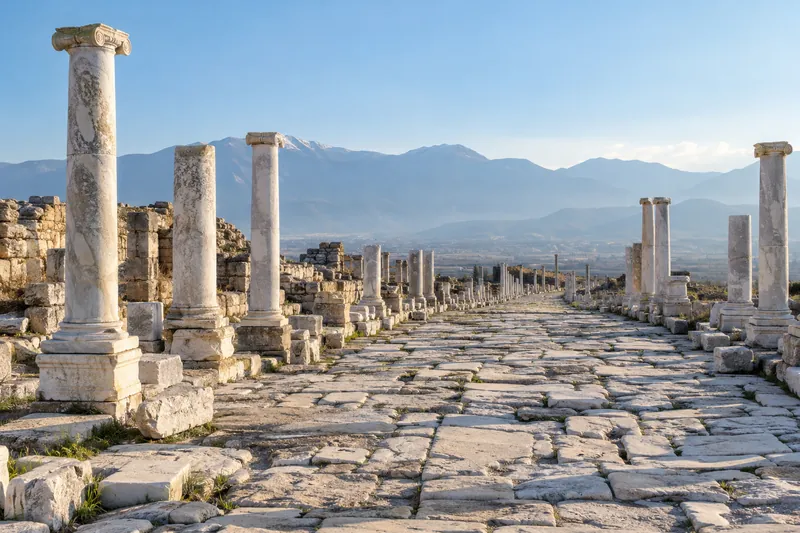
Near the upper gate, the Odeon is a small, steep theater of about 1,400 seats that likely served as a concert hall and council chamber. From there, Curetes Street, the marble main street, runs downhill toward the Library of Celsus. You pass the State Agora, the Temple of Hadrian with its carved arch, the public latrines and the Trajan Fountain. The paving still shows wheel ruts and carved game boards. Walking top to bottom shows how a Roman provincial capital was laid out, from civic buildings above to the harbor district below.
Library of Celsus
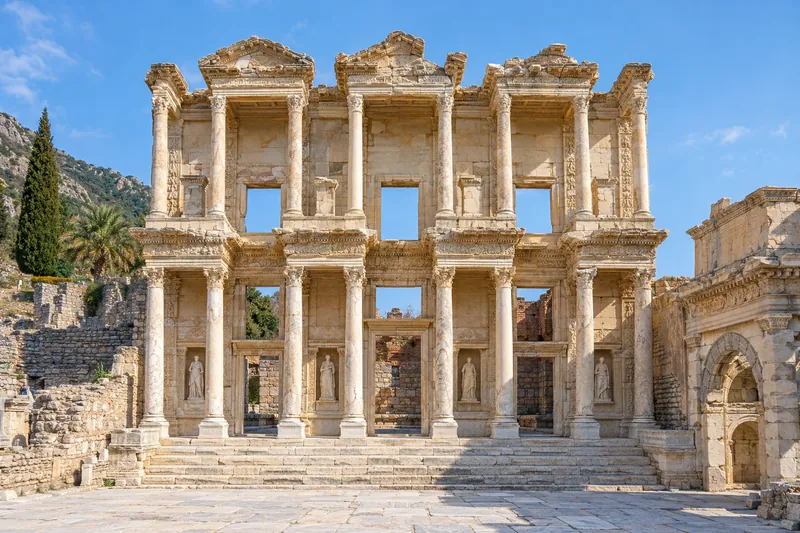
The two-story facade of the Library of Celsus is the image most people associate with Ephesus. It was built in the early 2nd century AD as a monument and tomb for Tiberius Julius Celsus Polemaeanus, a Roman governor, and once held thousands of scrolls. The facade you see today was re-erected by archaeologists in the 1970s. Stand back in the square in front to see the statues of the four virtues, Wisdom, Knowledge, Intelligence and Virtue, in their niches (the originals are in Vienna).
The Great Theater
The Great Theater held roughly 24,000 people and faces the old harbor road, the Arcadian Way. It is the setting of Acts 19:23–41, when the silversmith Demetrius stirred up a crowd against Paul's preaching and the assembly shouted "Great is Artemis of the Ephesians" for about two hours. Many visitors read the passage aloud from the stone seats. Parts of the upper seating may be roped off for conservation.
Terrace Houses (separate ticket)
The Terrace Houses are a set of Roman townhouses on the hillside above Curetes Street, protected under a modern roof. They hold some of the finest wall paintings and floor mosaics in the region, along with a marble hall still being reassembled piece by piece. Walkways with stairs take you above the excavated rooms. A separate ticket is required. Allow 45 minutes.
Ephesus Museum in Selçuk
The Ephesus Museum in Selçuk holds the finds that stayed in Turkey, including two famous statues of Artemis of Ephesus, household objects and frescoes from the Terrace Houses, and items from a gladiator cemetery. It is compact, air-conditioned and labeled in English, a good choice for the afternoon heat. Plan 45 minutes to an hour.
House of the Virgin Mary
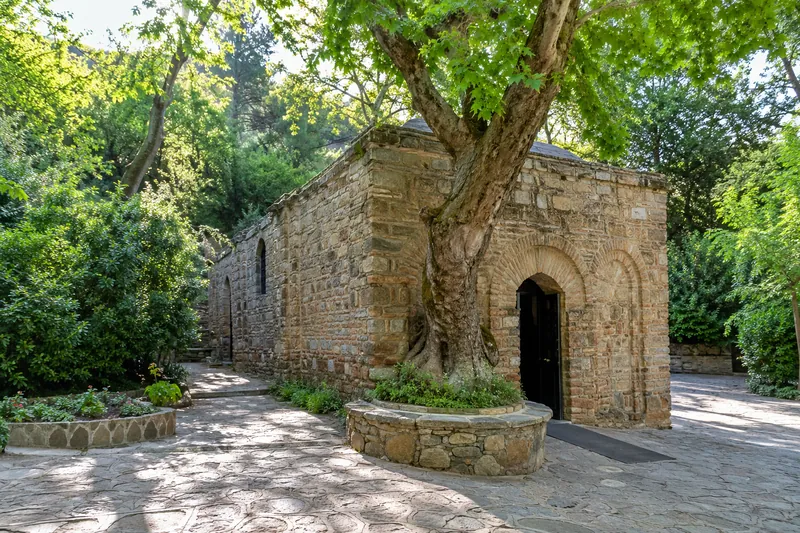
The House of the Virgin Mary (Meryem Ana Evi) is a small stone chapel on Bülbül Mountain, about 4 miles (7 km) from Ephesus. According to tradition, Mary spent her last years here in the care of the Apostle John. The site was identified in the 19th century and has been visited by three popes: Paul VI in 1967, John Paul II in 1979 and Benedict XVI in 2006. It is a working shrine, with Masses held regularly, a wall of prayer notes and spring-water taps below the chapel. Visitors of all faiths come here, and Muslims also honor Mary.
Basilica of St. John
The Basilica of St. John stands on Ayasuluk Hill in Selçuk, over the traditional tomb of John the Apostle. Emperor Justinian built the large domed church in the 6th century. Today you see restored columns, the baptistery, and the marked tomb area, with wide views over the Temple of Artemis site and the İsa Bey Mosque.
Temple of Artemis
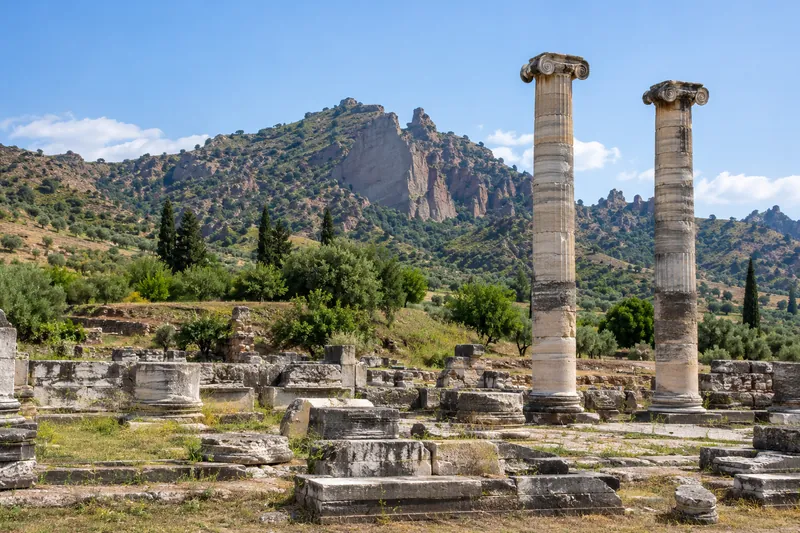
The Temple of Artemis was one of the Seven Wonders of the Ancient World. Today a single reassembled column stands in a marshy field just outside Selçuk, often with a stork's nest on top. There is little else to see, so a 10 to 15 minute stop is enough. Its value is context: this is the temple whose cult the silversmiths of Acts 19 were defending.
Şirince
Şirince is a hillside village about 5 miles (8 km) above Selçuk, known for its old stone houses, local fruit wines and olive oil shops. It makes a relaxed lunch or late-afternoon stop after a morning of ruins.
Ephesus in the Bible
Ephesus is central to the New Testament. Paul lived and taught here for more than two years (Acts 19:8–10, Acts 20:31), and his Letter to the Ephesians was addressed to the church here. The riot in the Great Theater is described in Acts 19. In Revelation 2:1–7, Ephesus is the first of the seven churches, praised for its endurance but told it had "abandoned the love you had at first." Tradition also links the Apostle John and Mary to the city.
Tickets and opening hours (as of October 2026)
Prices for foreign visitors are set in euros and charged in Turkish lira at the daily rate. Children under 8 enter state-run sites free. Hours shift in spring and autumn, so check muze.gov.tr the week you travel.
| Site |
Ticket for foreign visitors |
Hours |
Notes |
| Ephesus Ancient City |
€40 |
08:00–18:00, ticket office closes 17:45 |
Open daily. Includes the Ephesus Experience (digital) Museum. Evening opening Wed–Sat 18:00–21:30 listed on muze.gov.tr |
| Terrace Houses |
€15 (in addition to the main ticket) |
09:00–17:00, ticket sales until 16:30 |
Open daily. Whether Museum Pass covers it: |
| Ephesus + Terrace Houses combined ticket |
€52 |
As above |
Valid 72 hours |
| Ephesus Museum, Selçuk |
€10 |
08:30–17:30, ticket office closes 17:00 |
Open daily |
| Basilica of St. John |
€6 |
08:00–18:30 in winter season (from October) |
Official listing shows a lira price; confirm |
| House of the Virgin Mary |
|
|
Not a Ministry museum; separate fee and parking |
| Temple of Artemis |
Free |
Open-air |
Fenced field, viewable at any time |
| Şirince village |
Free |
Village |
Shops and restaurants keep their own hours |
Passes: A Museum Pass The Aegean (7 days) and a Museum Pass Türkiye (15 days) cover the ancient city and many regional sites. Recent sources list them at €95 and €165. A new tariff takes effect on April 1, 2027, so prices will rise next spring.
Best time to visit
April, May, late September and October are the most comfortable months, with warm days and lighter crowds. July and August are very hot and the site has little shade, so start at opening time.
| Months |
Weather |
Crowds |
Notes |
| March–April |
Mild, some rain |
Moderate, rising around Easter |
Wildflowers on the hills |
| May–early June |
Warm and dry |
Busy with cruise traffic |
A strong all-round choice |
| Late June–August |
Hot, often in the 90s°F (mid-30s°C) |
Heavy on cruise days |
Go at opening or late afternoon |
| September–October |
Warm, drying out |
Moderate |
Good light, comfortable walking |
| November–February |
Cool, wet spells |
Light |
Shorter hours, quiet site |
Guide's tip
Start at the upper (South, or Magnesian) gate and walk downhill toward the Library of Celsus and the lower (North) gate. You avoid climbing in the heat, and with a private vehicle your driver simply meets you at the bottom. On cruise days, crowds peak late morning, so arriving right at opening makes a real difference.
Practical tips
- Shoes: Wear closed shoes with good grip. Ancient marble paving is uneven and polished smooth by centuries of feet.
- Heat: In summer, carry water, a hat and sunscreen. There is very little shade between the upper gate and the library.
- Dress code: Shorts are fine at the ruins. At the House of the Virgin Mary and in mosques, cover shoulders and knees. Women need a headscarf in mosques.
- Photography: Personal photos are allowed at the ruins. Inside the House of the Virgin Mary, photography is generally not permitted, so follow the signs.
- Cash: Ticket desks take cards, but carry some Turkish lira for small purchases, the Virgin Mary site, parking and tips.
- Tipping: For a private guide and driver, tips are customary and appreciated. Your guide can advise on local norms.
- Accessibility: The main street is walkable with care, but expect slopes, steps and uneven stone. The Terrace Houses involve stairs. Starting at the upper gate keeps the route mostly downhill.
Common myths about Ephesus
- Myth: The Library of Celsus was only a library. Fact: It was also a monument and tomb: it was built in honor of the Roman official Celsus, whose sarcophagus lies in a chamber beneath the building.
- Myth: Ephesus was always an inland city. Fact: Ephesus was a port. Its harbor gradually silted up, and the coastline now lies several kilometers away.
From our guides' blog
- Turkey Shore Excursions for Cruise Passengers: Private full-day tours from Istanbul's Galataport and from Kuşadası port to Ephesus, with timing, what is included and refunds if your ship is late.
- Ephesus Terrace Houses: Worth the Extra Ticket?: What you see in the Ephesus Terrace Houses, the October 2026 ticket price, time needed, stairs and access, and when to go during your Ephesus visit.
- Paul in Ephesus: Reading Acts 19 on Site: Read Acts 19 where it happened: the theater riot, Harbor Street, Temple of Artemis, Basilica of St. John and Mary's House, with a one-day faith route.
Sources
FAQ
Is Ephesus worth visiting?
Yes. Ephesus is one of the largest and most complete Roman cities in the Mediterranean, and a UNESCO World Heritage Site since 2015. You walk real marble streets past the Library of Celsus and the theater from Acts 19. For travelers interested in history or the Bible, it is usually a highlight of a Turkey trip.
How long does it take to see Ephesus?
Allow 2.5 to 3 hours for the ancient city and about 45 minutes for the Terrace Houses. Adding the Ephesus Museum, the House of the Virgin Mary and the Basilica of St. John makes a full day. A day and a half lets you include Şirince and a slower pace in summer heat.
Are the Terrace Houses worth the extra ticket?
For most visitors, yes. The Terrace Houses show how wealthy Ephesians actually lived, with frescoes, mosaics and marble rooms preserved under a protective roof. They are a different experience from the open-air ruins and take about 45 minutes. The ticket is separate from the main Ephesus entry and is sold at the Terrace Houses entrance.
Can I visit Ephesus from a cruise ship in Kuşadası?
Yes. Ephesus is about 20 to 30 minutes from Kuşadası port. A typical port day covers the ancient city and the Terrace Houses, with time for the House of the Virgin Mary or the Ephesus Museum. A private guide and vehicle help you avoid waiting for large shore-excursion groups and keep you on schedule for the ship.
Which entrance should I use at Ephesus?
Most guides recommend entering at the upper (South) gate and exiting at the lower (North) gate, so the walk is downhill and ends at the Library of Celsus and the Great Theater. This works well with a private driver who drops you at the top and collects you at the bottom.
Is the House of the Virgin Mary a real historical site?
The house is a traditional site rather than a proven one. The chapel was identified in the 19th century, and the Catholic Church treats it as a place of pilgrimage without making a formal historical claim. Three popes have visited. Many travelers of different faiths find it a moving place to pray or reflect.
What should I wear to Ephesus?
Light, breathable clothing, a hat and sturdy closed shoes. Shorts are fine in the ancient city. If you plan to visit the House of the Virgin Mary, the Basilica of St. John or a mosque the same day, bring a layer that covers your shoulders and knees, plus a scarf for women entering a mosque.
How do you get to Ephesus?
Ephesus sits about 2 miles (3 km) outside Selçuk in İzmir Province, western Turkey. Most travelers arrive by flying into İzmir Adnan Menderes Airport (ADB) or by cruise ship into Kuşadası. From İzmir Airport (ADB): roughly a one-hour drive south on the highway.
When is the best time to visit Ephesus?
April, May, late September and October are the most comfortable months, with warm days and lighter crowds. July and August are very hot and the site has little shade, so start at opening time.
Is Ephesus a UNESCO World Heritage Site?
Yes. It is on the UNESCO World Heritage List as “Ephesus”, inscribed in 2015.
Which private tours include Ephesus?
Several of our private tours include Ephesus, starting from 5 days. They are listed at the top of this page with routes and prices per person.