
Food & culture
What to Eat in Turkey: A Regional Food Guide for First-Time Visitors
By Selçuk YılmazLicensed national guide · 15 years
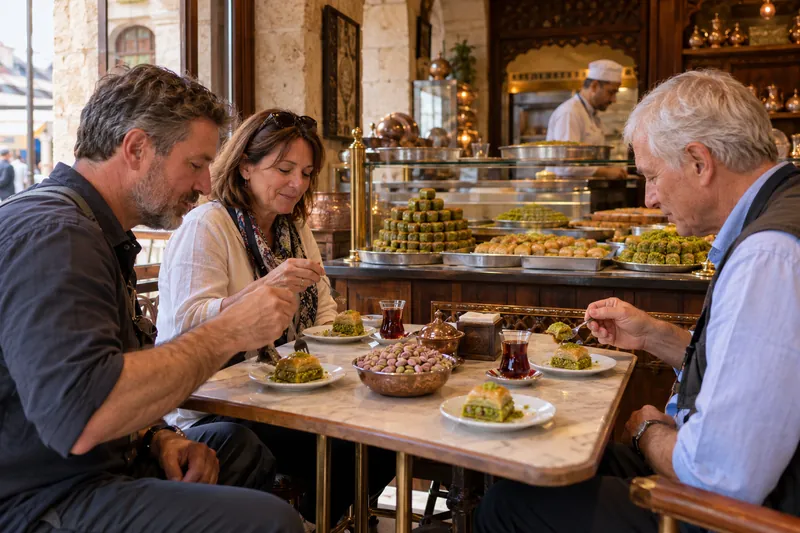
Short answer: Turkish food changes a lot from region to region. In Istanbul, start with a full Turkish breakfast and an evening of meze; in Cappadocia, try testi kebab cooked in a sealed clay pot; on the Aegean coast around Ephesus, eat vegetables cooked in olive oil. Gaziantep, a UNESCO Creative City of Gastronomy, is the place for baklava, and Turkish coffee and tea are part of daily life everywhere.
Many visitors arrive thinking Turkish food means kebab. Kebab is part of it, but the bigger story is regional. The olive groves of the Aegean, the wheat and pepper country of the southeast, the Black Sea coast and the old palace kitchens of Istanbul all cook differently.
This guide is for first-time visitors who want to eat well without guessing. It covers what to order, where each dish belongs, how to manage dietary needs, and how ordering works in an ordinary Turkish restaurant.
What is a Turkish breakfast?
A Turkish breakfast (kahvaltı) is a spread of many small plates shared at the table: cheeses, olives, tomatoes, cucumbers, eggs, honey, jams and bread, with endless glasses of tea. On a slow morning it can easily last an hour.
Expect white cheese and aged kaşar, green and black olives, kaymak (a thick clotted cream) with honey, and simit, the sesame-crusted bread ring sold on every street corner. Eggs often come as menemen, scrambled with tomatoes and green peppers, or sucuklu yumurta, fried with spicy sausage. Most hotels serve a buffet version. For the real thing, a breakfast café that brings a serpme kahvaltı (a full spread for the table) is worth one morning of your trip.
What is meze, and how do you order it?
Meze are small cold and hot plates served before the main course, usually with rakı, the anise-flavored spirit, or with wine. In a meyhane (a traditional tavern), meze can be the whole meal.
Cold meze often arrive on a tray, and you point at the ones you want. Common choices include haydari (thick yogurt with garlic and herbs), ezme (a spicy chopped tomato and pepper salad), stuffed vine leaves, smoked eggplant salad, and fava (a purée of dried broad beans). Hot meze follow: fried calamari, börek pastries, grilled halloumi-style cheese. Order a few at a time. It is normal to keep adding plates as the evening goes on.
Which kebabs belong to which region?
Each kebab has a home town. Adana kebab is spicy and from the south, İskender comes from Bursa in the northwest, and testi kebab is the dish visitors associate with Cappadocia.
| Dish | Home region | What it is |
|---|---|---|
| Adana kebab | Adana, south | Hand-minced lamb with red pepper, grilled on a wide skewer; spicy |
| Urfa kebab | Şanlıurfa, southeast | The same style without the heat |
| İskender kebab | Bursa, northwest | Thin slices of döner over bread, with tomato sauce, browned butter and yogurt |
| Testi kebab | Central Anatolia, Cappadocia | Meat and vegetables slow-cooked in a sealed clay pot, cracked open at the table |
| Beyti | Istanbul | Minced meat wrapped in thin flatbread, sliced, with yogurt and tomato sauce |
İskender kebab is linked to the İskender family in Bursa, whose restaurant dates its recipe to 1867. If you are in Bursa, try it there. Testi kebab is as much a show as a meal: the pot is brought to the table and broken with a knife or small hammer. In Cappadocia, many restaurants ask you to order it in advance because the cooking takes hours.
What is the difference between pide and lahmacun?
Pide is a boat-shaped flatbread baked with toppings such as cheese, minced meat or egg. Lahmacun is a very thin round flatbread spread with spiced minced meat, which you roll up with parsley and lemon.
Both come out of a wood-fired oven and both are cheap, filling lunches. Pide is closely tied to the Black Sea coast, while lahmacun is a southeastern specialty, eaten across the country. A good lahmacun is crisp at the edges and soft in the middle. Squeeze lemon over it, add parsley and a bit of onion, and roll it up.
What should you eat on the Aegean coast?
On the Aegean, look for zeytinyağlı dishes: vegetables cooked slowly in olive oil and served at room temperature. This is the food of the olive-growing coast around İzmir and Ephesus.
Typical dishes include green beans in tomato and olive oil, artichokes cooked with dill, and stuffed peppers or vine leaves made with rice instead of meat. Wild greens dressed simply with oil and lemon appear in spring. Grilled fish is the other Aegean staple, usually chosen fresh from the display and priced by weight, so ask the price before it goes on the grill. These dishes are also the easiest part of Turkish cooking for vegetarians.
Why is Gaziantep famous for food?
Gaziantep, in the southeast, has one of the strongest food cultures in Türkiye. UNESCO named it a Creative City of Gastronomy in 2015, and in 2013 Antep baklava was registered as a protected geographical indication in the European Union.
Antep baklava is made with very thin layers of pastry and the bright green pistachios grown in the region. It is lighter and less sweet than most people expect. Order it in the morning, when it is freshest, and look for it served with a glass of water and tea. The local table also includes many kinds of kebab, stuffed vegetables, yogurt soups and lahmacun. Gaziantep is also home to the Zeugma Mosaic Museum, so it rewards a stop on a trip to the southeast. Our 6-day private southeast Turkey tour starts there.
How do Turkish coffee and tea fit into the day?
Tea is the everyday drink, served in small tulip-shaped glasses all day long. Turkish coffee is stronger, slower and more ceremonial. Both are recognized by UNESCO as intangible cultural heritage.
Turkish coffee culture and tradition was inscribed on UNESCO’s list in 2013. The coffee is finely ground, simmered with water and sugar in a small pot, and served with a glass of water. Order it sade (no sugar), az şekerli (a little), orta (medium) or şekerli (sweet), because the sugar goes in during brewing, not after. Let the grounds settle and stop drinking before you reach them.
Tea culture followed in 2022, when the culture of çay was inscribed jointly by Türkiye and Azerbaijan. Most tea in Türkiye is black tea from the eastern Black Sea region. You will be offered it in shops, offices and carpet showrooms. Accepting a glass is polite and does not oblige you to buy anything.
How do you manage vegetarian, gluten-free or halal needs?
Vegetarian travelers eat well in Türkiye, though meat stock can hide in soups and rice. Gluten-free takes more care because bread and bulgur are everywhere. Halal is the default in most restaurants.
- Vegetarian: ask for etsiz (without meat). Olive-oil vegetable dishes, meze, lentil soup, gözleme (stuffed flatbread) and many salads work well. Ask whether a soup or pilaf uses et suyu (meat stock).
- Vegan: zeytinyağlı dishes are usually vegan; yogurt and butter appear often elsewhere.
- Gluten-free: bulgur is wheat, and many dishes are thickened or served with bread. Grilled meats, fish, rice pilaf and salads are safer choices. Carry a written card in Turkish explaining your needs.
- Halal: pork is rarely served outside some international hotels and restaurants. If you avoid alcohol, note that many mid-range restaurants serve it, while many traditional lokantas do not.
On our tours, we tell restaurants about dietary needs ahead of time. If you are traveling on your own, a translated note is the simplest tool you can carry.
How does ordering work in a Turkish restaurant?
In a lokanta (a canteen serving ready-cooked dishes), you walk to the counter and point at what you want. In a full-service restaurant, you order from the menu or choose meze and fish from a display.
Lokantas are where working people eat lunch: stews, beans, vegetables, rice and soups kept warm in trays. They are quick, honest and inexpensive, and they are often the most reliable meal in a small town. Bread usually comes to the table automatically. The bill (hesap) is not brought until you ask for it. Service is not always included, so read our guide to tipping in Turkey before you go.
If food is a big part of why you travel, it is easy to build days around it: a market morning in Istanbul, a testi kebab dinner in Cappadocia, an olive-oil lunch near Ephesus. You can set that rhythm yourself with Build your trip.
Sources
- UNESCO: Turkish coffee culture and tradition
- Azerbaijan National Commission for UNESCO: Culture of Çay (tea)
- Al-Monitor: Gaziantep joins UNESCO Creative Cities as a city of gastronomy
- EU Delegation to Türkiye: Gaziantep’s tastes secure EU protection
- Kebapçı İskender: History since 1867
FAQ
What is the most famous food in Turkey?
Kebab is the dish most people know abroad, but Turkish breakfast, meze, pide, lahmacun, olive-oil vegetable dishes and baklava are just as central. Each region has its own specialties: Adana kebab in the south, İskender in Bursa, testi kebab in Cappadocia, olive-oil dishes on the Aegean and baklava in Gaziantep.
Is it easy to eat vegetarian in Turkey?
Yes, with a little care. Olive-oil vegetable dishes, meze, lentil soup, gözleme and salads are widely available. Ask for etsiz, meaning without meat, and check whether soups or rice pilaf are made with et suyu, meat stock. Lokantas, which display ready-cooked dishes, make it easy to see what you are choosing.
What is testi kebab?
Testi kebab is a Cappadocia specialty in which meat and vegetables are slow-cooked for hours in a sealed clay pot. The pot is brought to the table and cracked open in front of you. Many restaurants ask you to order it in advance because of the long cooking time.
How do you order Turkish coffee?
Tell the waiter how sweet you want it, because sugar is added during brewing: sade for no sugar, az şekerli for a little, orta for medium and şekerli for sweet. It comes with a glass of water. Let the grounds settle and stop before you reach them. UNESCO added Turkish coffee culture to its intangible heritage list in 2013.
Is food in Turkey halal?
Most restaurants in Türkiye serve halal meat, and pork is rarely found outside some international hotels and restaurants. Alcohol is a separate question: many mid-range and tourist restaurants serve it, while many traditional lokantas do not. If either matters to you, ask before you sit down or arrange it through your tour operator.
Summarize this post with an AI assistant
Private tours that go there
Every tour runs with your own licensed guide and vehicle, and every one can be adjusted.
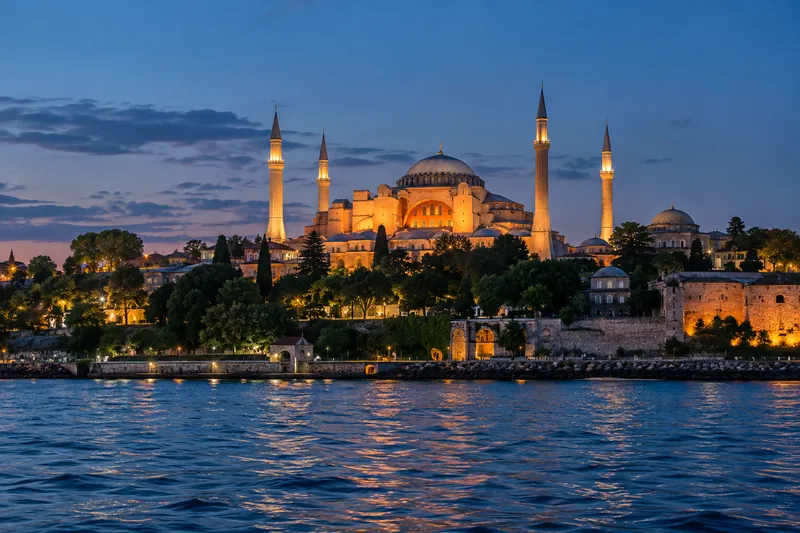
7-Day Private Turkey Highlights Tour: Istanbul, Cappadocia, Ephesus & Pamukkale
Istanbul · Cappadocia · Ephesus · Pamukkale · Kuşadası
Includes: 4-star hotels · Domestic flights · Entrance fees
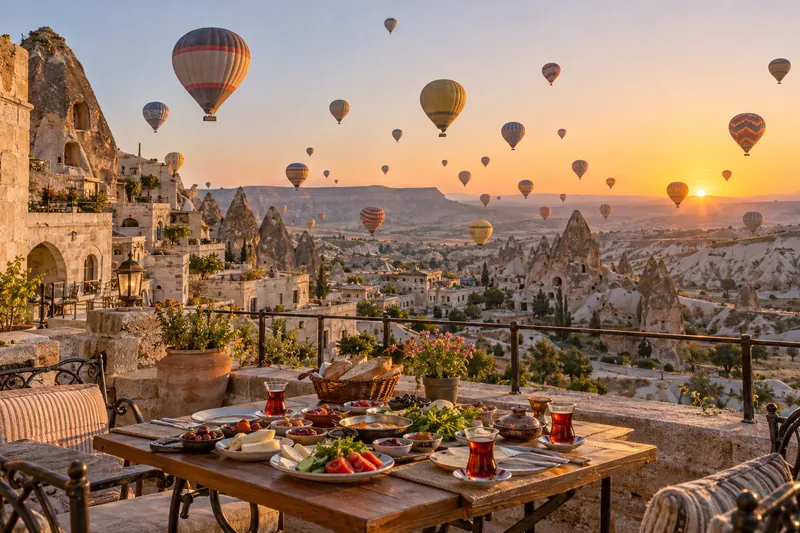
8-Day Private Turkey Tour: Istanbul, Cappadocia, Ephesus & Pamukkale
Istanbul · Cappadocia · Ephesus · Pamukkale · Kuşadası
Includes: 5-star hotels · Domestic flights
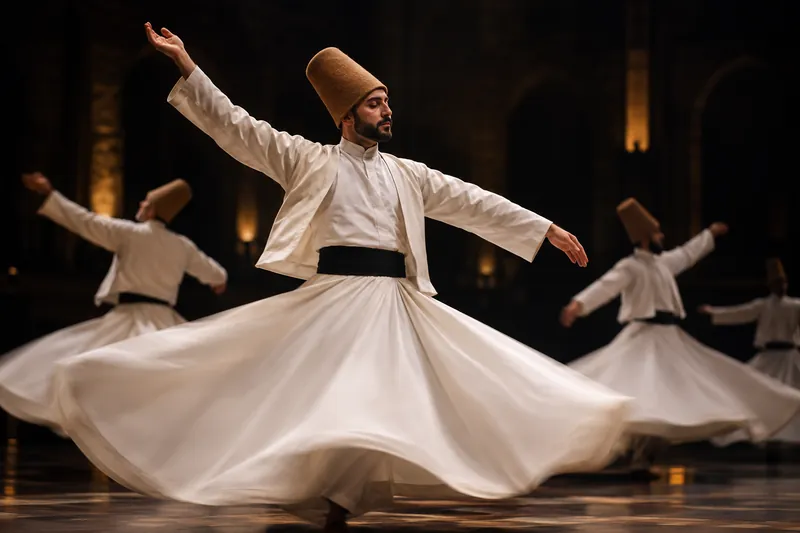
8-Day Private Turkey Tour Package: Istanbul, Cappadocia, Konya, Pamukkale & Ephesus
Istanbul · Cappadocia · Konya · Pamukkale · Ephesus · Kuşadası
Includes: 4-star hotels · Domestic flights · Entrance fees
More from the blog
All articles
Turkey Itinerary Mistakes We See Most Often and How to Avoid Them
Ten common Turkey itinerary mistakes, from driving to Cappadocia to Tuesday at Topkapı, and the simple fix for each one.
 Evren SatırFounder, Turkey Itineraries · 7 min read
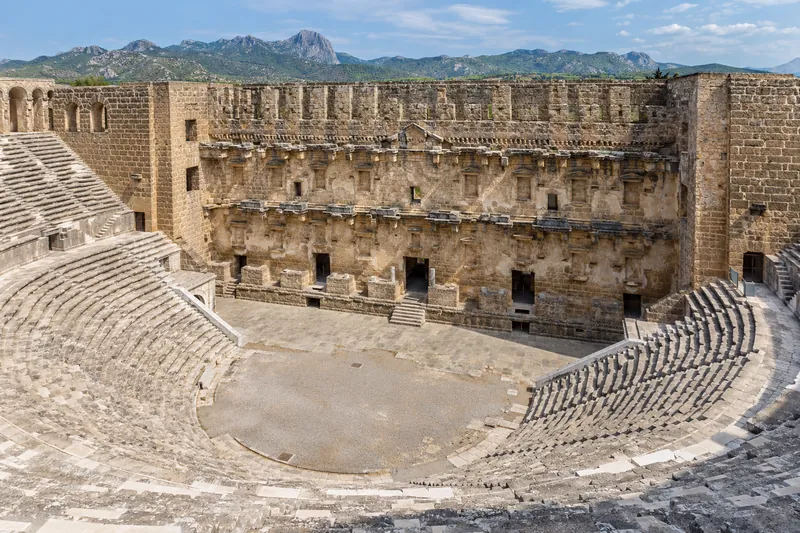
Antalya’s Ancient Cities in One Day: Perge, Aspendos and Side
The right order, driving times, October 2026 tickets and what to skip on a day trip to Perge, Aspendos and Side from Antalya.
 Osman DemirLicensed guide · 6 min read
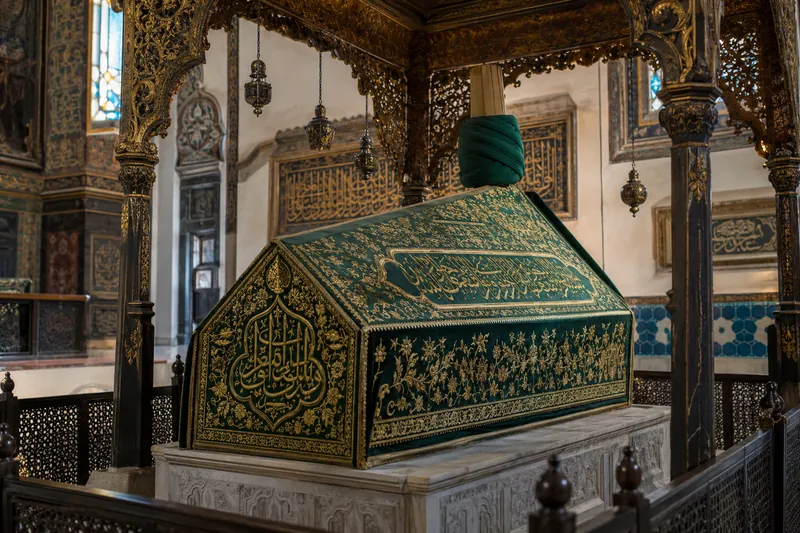
Visiting Konya: Rumi’s Tomb, the Sema Ceremony and Seljuk Sites
Rumi's tomb, a real Saturday sema, Seljuk tilework and a plate of etli ekmek: how to spend a night in Konya between Cappadocia and Pamukkale.
 Bahar ÖzdemirLicensed guide · 7 min read