
Food & culture
Visiting Konya: Rumi’s Tomb, the Sema Ceremony and Seljuk Sites
By Bahar ÖzdemirLicensed national guide · 15 years
Short answer: Konya is the city of Mevlana Celaleddin Rumi, and the reason to stop is his tomb under the green-tiled dome of the Mevlana Museum, which is free to enter as of October 2026. If your dates allow, see a real sema (the whirling ceremony) at the Mevlana Cultural Center, held most Saturday evenings, and add the Seljuk madrasas and a lunch of etli ekmek. One night breaks the long drive between Cappadocia and Pamukkale well.
Who was Rumi, and why Konya?
Rumi was a 13th-century Muslim scholar, mystic and poet whose Persian verse is still widely read around the world. He was born on September 30, 1207, in the region of Balkh in Central Asia, and died in Konya on December 17, 1273.
His family fled west ahead of the Mongol invasions and, after years on the road, settled in Konya in 1228 at the invitation of the Seljuk sultan Alaeddin Keykubad I. Konya was then the capital of the Seljuk Sultanate of Rum, which is why the city is so rich in 13th-century architecture.
In 1244 Rumi met the wandering dervish Shams of Tabriz, a friendship that transformed him from a respected teacher into a poet. His major work, the Masnavi, runs to roughly 27,000 lines. After his death, his son Sultan Walad and his followers founded the Mevlevi order, known in the West as the Whirling Dervishes. In Turkey he is usually called Mevlana, “our master.”
The Mevlana Museum: Rumi’s tomb and the green dome
The Mevlana Museum is the former Mevlevi lodge and the mausoleum of Rumi, and it is the heart of any visit to Konya. Entry is free as of October 2026.
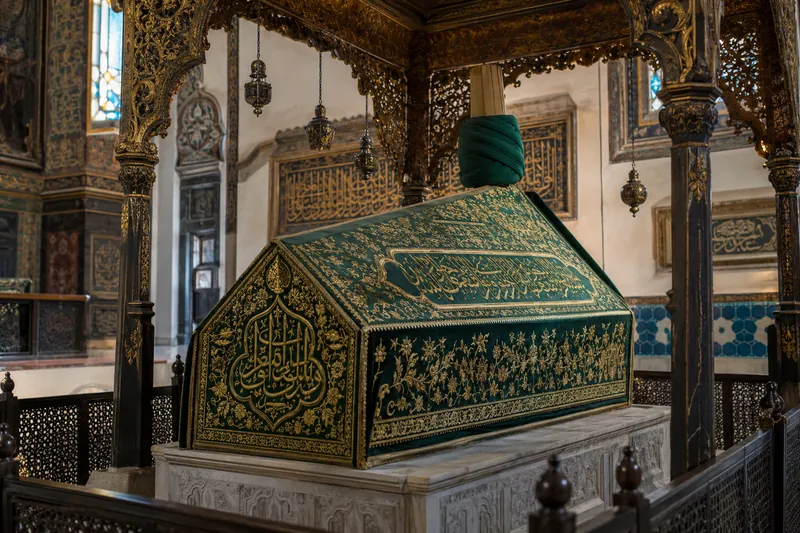
The tomb was completed in 1274, the year after Rumi’s death, by the architect Badr al-Din Tabrizi. Its fluted conical dome, covered in turquoise-green tiles, is known in Turkish as Kubbe-i Hadra, the Green Dome, and it is the symbol of the city.
Inside the mausoleum you see Rumi’s sarcophagus, those of his father and family members, and the graves of Mevlevi sheikhs. The adjoining rooms display early manuscripts, including copies of the Masnavi dated 1278 and 1371, as well as musical instruments and a mother-of-pearl box believed to hold a hair from the beard of the Prophet Muhammad. The Semahane, the ritual hall where the dervishes once whirled, was added in the reign of Süleyman the Magnificent. Around the courtyard, 17 dervish cells built under Murad III show how the community lived.
After the Turkish Republic closed the Sufi lodges, a decree of April 6, 1926, turned the complex into a museum, which opened on March 2, 1927.
Visiting with respect
Remember that this is a museum and also a place of active pilgrimage. Many Turkish visitors come to pray at the tomb.
- Dress modestly: shoulders and knees covered. Women may want a light scarf, which is respectful though the museum does not require it.
- Speak quietly in the mausoleum and step aside for anyone praying.
- Expect crowds on Fridays, weekends and religious holidays. A weekday morning is calmer.
What is the Sema ceremony and where can you see it?
The sema is a Mevlevi prayer in movement, not a dance show. UNESCO proclaimed the Mevlevi Sema Ceremony a masterpiece of intangible heritage in 2005 and inscribed it on the Representative List of the Intangible Cultural Heritage of Humanity in 2008.
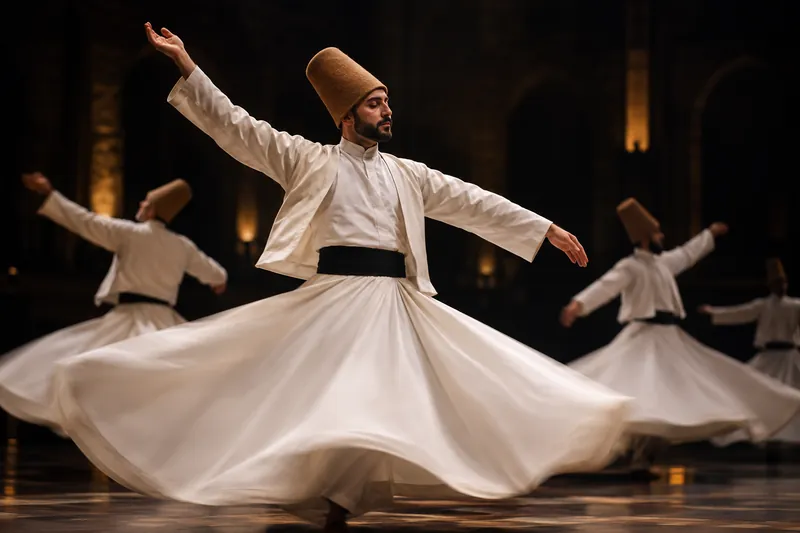
In the ceremony, the semazens turn on the left foot while the right foot moves them around it, accompanied by music called ayin, played on instruments including the ney (reed flute) and kettledrum. The ceremony has a fixed structure and ends in prayer.
Weekly sema at the Mevlana Cultural Center
Konya’s Mevlana Cultural Center, a short walk from the museum, holds a sema program on most Saturdays at 19:00 in its covered Sema Hall. As of October 2026 tickets are sold through the Biletinial website, starting at about 200 Turkish lira. The schedule is not every single week, so check the listed dates before you plan your night in Konya around it.
Şeb-i Arus in December
The largest event is Şeb-i Arus, the “Wedding Night,” which marks the anniversary of Rumi’s death, seen by his followers as his reunion with God. The international commemoration runs each year from December 7 to 17, with the main ceremony on the evening of December 17 at the Mevlana Cultural Center. In 2025 it marked the 752nd anniversary. Tickets go on sale through Biletinial and sell quickly, so book as soon as dates are announced.
Sema etiquette
- No applause during the ceremony. It is a religious rite, and silence is part of it. If you wish, you can show appreciation quietly at the end.
- No flash photography at any point. Follow the rules announced at the venue for photos and video in general.
- Arrive early and stay seated until the final prayer is over.
Konya’s Seljuk sites
Konya has one of the strongest concentrations of Seljuk architecture in Turkey, and the main sites sit close together around Alaeddin Hill. You can see the three listed below in about two to three hours.
| Site | Date | What to look for |
|---|---|---|
| Alaeddin Mosque | Completed 1220 to 1221 | Ebony minbar dated 1155, reused Byzantine columns, tombs of Seljuk sultans in the courtyard |
| Karatay Madrasa | 1251 | Dome covered in turquoise and black tile mosaic; tile museum since 1954 |
| İnce Minareli Madrasa | Begun 1265 | Carved stone portal with Quranic inscriptions; Museum of Stone and Wood Art |
The Alaeddin Mosque crowns the hill at the center of the city. Its courtyard holds two tombs, one containing the sarcophagi of eight Seljuk sultans of Rum.
The Karatay Madrasa, built by the vizier Jalal al-Din Qaratay, is my favorite stop for visitors who enjoy color. Look up at the dome, where black and turquoise tiles form a star pattern around an open oculus. The museum also displays tiles from the Seljuk palace at Kubadabad.
The İnce Minareli Madrasa (“Madrasa of the Slender Minaret”) was commissioned by the vizier Sahib Ata. Lightning destroyed most of its tall minaret in 1901, but the portal survives, its stone carved with broad bands of Quranic inscription instead of the usual muqarnas hood.
Çatalhöyük: a Neolithic town near Konya
Çatalhöyük is one of the earliest large settlements in the world, about 60 kilometers from Konya near Çumra, and a UNESCO World Heritage Site since 2012. People lived on its eastern mound from roughly 7400 to 6200 BC, in houses packed so close together that they entered through the roof.
As of October 2026 the site is open daily from 09:00 to 17:00. Visitors see a small visitor center, the covered excavation areas and a replica house, and the site states that entry is with a guide or site guard. Allow about three hours from Konya including the drive. It is not wheelchair accessible. The famous wall paintings and figurines are mostly in the Museum of Anatolian Civilizations in Ankara, so set expectations: this is a site for people who enjoy archaeology.
What should you eat in Konya? Etli ekmek and more
Etli ekmek, a very long, thin flatbread topped with finely chopped meat and baked in a wood oven, is the dish to try in Konya. It is often called Turkish pizza, but it is thinner and crisper than pide and served cut into strips. Order it with ayran (salted yogurt drink) at a local etli ekmek salonu.
Konya is also known for fırın kebabı, slow-roasted lamb served on bread. Restaurants around the Mevlana Museum serve both dishes, and lunch is the traditional time to eat them.
How does Konya fit between Cappadocia and Pamukkale?
Konya sits on the natural route between Cappadocia and Pamukkale, and it turns a very long drive into two comfortable ones. The drive from Cappadocia to Konya takes about three hours, with a stop at the Sultanhanı caravanserai (built in 1229) on the way. From Konya to Pamukkale is roughly five hours.
Konya also matters for Christian travelers: it is ancient Iconium, where Paul and Barnabas preached on their first missionary journey (Acts 14:1-6).
A sample stopover:
- Leave Cappadocia after breakfast and stop at Sultanhanı.
- Arrive in Konya for a late lunch of etli ekmek.
- Visit the Mevlana Museum in the afternoon, then the Karatay Madrasa.
- Attend a Saturday sema if your dates match.
- Next morning, see the Alaeddin Mosque, then continue to Pamukkale.
Our Konya guide has more on the city, and our Pamukkale guide covers the next stop. Konya is built into the 8-Day Private Turkey Tour: Istanbul, Cappadocia, Konya, Pamukkale and Ephesus, or you can add it to your own route through Build your trip. Before you go, our Turkey travel tips cover dress and money basics.
Sources
- UNESCO Intangible Cultural Heritage: Mevlevi Sema Ceremony
- UNESCO World Heritage Centre: Neolithic Site of Çatalhöyük
- Konya Metropolitan Municipality: Mevlana Cultural Center
- Ministry of Culture and Tourism: Şeb-i Arus ticket information
- Çatalhöyük Research Project: Visiting
- Mevlana Museum (overview)
- Karatay Madrasa (overview)
FAQ
Is the Mevlana Museum in Konya free to enter?
Yes. As of October 2026, entry to the Mevlana Museum, which houses Rumi's tomb under the green-tiled dome, is free. It is both a museum and an active place of pilgrimage, so dress modestly with shoulders and knees covered, keep your voice low in the mausoleum, and step aside for people praying.
When can I see the whirling dervishes in Konya?
The Mevlana Cultural Center holds a sema program on most Saturdays at 19:00 in its covered Sema Hall, with tickets sold through Biletinial from about 200 Turkish lira as of October 2026. The largest event is Şeb-i Arus, held each year from December 7 to 17, with the main ceremony on December 17.
Can I clap or take photos during a sema ceremony?
Do not applaud during a sema. It is a Mevlevi religious rite, not a performance, and silence is part of it. Flash photography is not allowed. Rules for photos and video without flash vary by venue, so follow the announcement before the ceremony begins and stay seated until the closing prayer.
Is Konya worth a stop between Cappadocia and Pamukkale?
Yes. Konya splits a very long drive into a three-hour leg from Cappadocia and a roughly five-hour leg to Pamukkale. One night lets you see Rumi's tomb, the Seljuk madrasas and, on the right dates, a sema. The Sultanhanı caravanserai, built in 1229, is a good stop on the way from Cappadocia.
How far is Çatalhöyük from Konya?
Çatalhöyük is about 60 kilometers from Konya, near the town of Çumra. It is a UNESCO World Heritage Site, occupied from roughly 7400 BC. The site is open daily from 09:00 to 17:00 as of October 2026, and visitors are taken into the excavation areas by a guide or site guard. Allow about three hours including the drive.
Summarize this post with an AI assistant
Private tours that go there
Every tour runs with your own licensed guide and vehicle, and every one can be adjusted.
8-Day Private Turkey Tour Package: Istanbul, Cappadocia, Konya, Pamukkale & Ephesus
Istanbul · Cappadocia · Konya · Pamukkale · Ephesus · Kuşadası
Includes: 4-star hotels · Domestic flights · Entrance fees
12-Day Private Turkey Tour: Istanbul, Safranbolu, Cappadocia, Sagalassos & Fethiye
Istanbul · Safranbolu · Cappadocia · Konya · Sagalassos · Fethiye
Includes: 4-star hotels · Domestic flights · Entrance fees
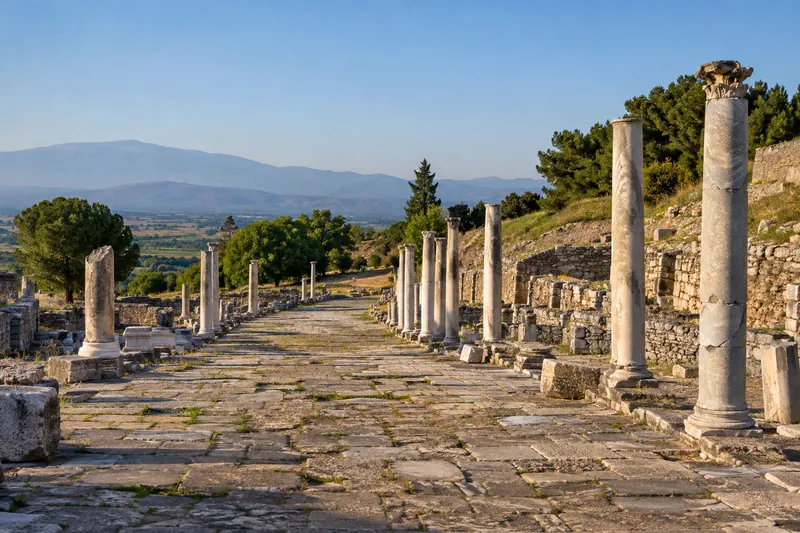
12-Day Private Turkey Tour: Istanbul, Troy, Pergamon, Ephesus, Pamukkale & Cappadocia
Istanbul · Troy · Pergamon · Ephesus · Kuşadası · Pamukkale
Includes: 4-star hotels · Entrance fees
More from the blog
All articles
Turkey Itinerary Mistakes We See Most Often and How to Avoid Them
Ten common Turkey itinerary mistakes, from driving to Cappadocia to Tuesday at Topkapı, and the simple fix for each one.
 Evren SatırFounder, Turkey Itineraries · 7 min read
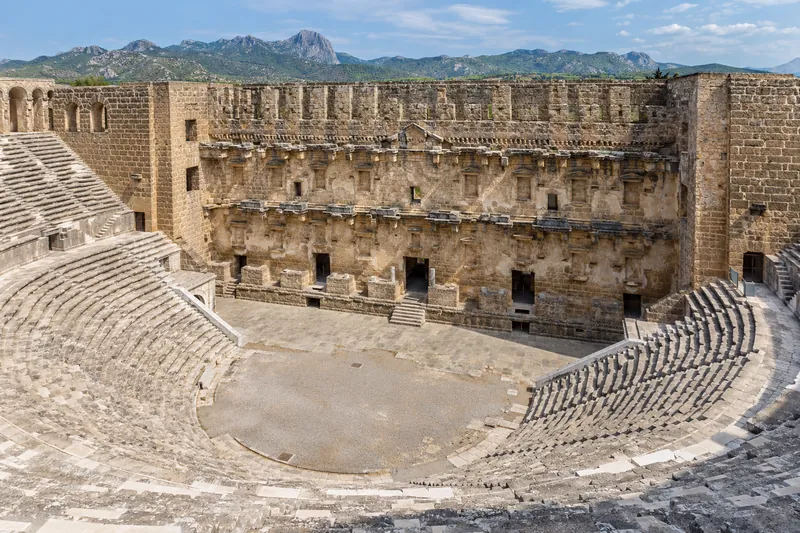
Antalya’s Ancient Cities in One Day: Perge, Aspendos and Side
The right order, driving times, October 2026 tickets and what to skip on a day trip to Perge, Aspendos and Side from Antalya.
 Osman DemirLicensed guide · 6 min read
Istanbul Beyond Sultanahmet: Balat, Chora, Galata and the Asian Side
A licensed Istanbul guide's plan for the neighborhoods most visitors miss, from the Patriarchate and Chora to Galata, Kadıköy and Çamlıca.
 KübraLicensed guide · 7 min read