
History
Gallipoli and Troy in One Trip: A Guide’s Plan from Istanbul
By Selçuk YılmazLicensed national guide · 15 years
Short answer: Gallipoli and Troy sit on opposite shores of the Dardanelles, about an hour apart with the ferry or the bridge, so they combine naturally in one trip from Istanbul. Plan two days: one for the Gallipoli battlefields and one for Troy and the Troy Museum, with a night in Çanakkale between them. Around April 25, Anzac Day, expect road closures and large crowds on the peninsula.
Gallipoli and Troy are two of the most visited historic places in northwest Türkiye, and they are separated by about 3,000 years but only a short stretch of water. One is the setting of the Trojan War story and a real Bronze Age city. The other is the ground where the 1915 campaign was fought, a defining event for Turks, Australians and New Zealanders.
This guide explains the geography, what you actually see at each site, the key facts of the campaign, and how much time to give each one.
Where are Gallipoli and Troy, and how do you get there from Istanbul?
Both are in Çanakkale province, on either side of the Dardanelles, the narrow strait that links the Aegean with the Sea of Marmara. Gallipoli is on the European shore, Troy on the Asian shore, and the town of Çanakkale sits between them on the Asian side.
From Istanbul, the drive runs west through Thrace to the Gallipoli peninsula. It is a long day on the road, roughly five hours depending on traffic and stops, so most travelers either go straight to the battlefields or break the drive. To cross the strait, you have two choices:
- The car ferries between Eceabat or Kilitbahir on the peninsula and Çanakkale town. The crossing is short and gives a good view of the narrows where the 1915 naval battle took place.
- The 1915 Çanakkale Bridge, opened on March 18, 2022. Its main span of 2,023 meters is a deliberate reference to 2023, the centenary of the Turkish Republic. It is a toll bridge.
Troy is about 30 kilometers south of Çanakkale town. A night in Çanakkale, on the waterfront, makes the whole plan easy.
What happened at Gallipoli in 1915?
In 1915, Britain and France tried to force the Dardanelles, capture Constantinople and knock the Ottoman Empire out of the First World War. The attempt failed after eight months of fighting, and the Allied forces were withdrawn by January 1916.
- March 18, 1915: a large Allied fleet tried to force the strait and was turned back, losing several ships to mines. Turks mark the date as the Çanakkale Victory.
- April 25, 1915: Allied troops landed on the peninsula, British and other forces at Cape Helles in the south, Australian and New Zealand troops at what became Anzac Cove.
- August 1915: a major offensive. Australians fought at Lone Pine from August 6 to 10, and New Zealand troops took the summit of Chunuk Bair on August 8 before Ottoman forces retook it.
- December 1915 to January 1916: the Allies evacuated, first from Anzac and Suvla, then from Helles.
The human cost was enormous. New Zealand’s official history records more than 130,000 deaths in total, including at least 87,000 Ottoman soldiers, about 44,000 Allied soldiers, more than 8,700 Australians and 2,779 New Zealanders.
On April 25, the Ottoman 19th Division under Mustafa Kemal moved quickly to the heights above the Anzac landing and stopped the advance inland. He later became Atatürk, the founder of the Turkish Republic, which is one reason the campaign holds such a central place in Turkish memory.
Why does Gallipoli matter to Turks, Australians and New Zealanders?
For Turks, Çanakkale is a defensive victory and a story of national sacrifice that led toward the Republic. For Australians and New Zealanders, it was their first major campaign as young nations, and April 25 became Anzac Day, their main day of remembrance.
What visitors often notice is how the two memories sit side by side. Turkish and Allied cemeteries are close together across the peninsula, and a memorial at Anzac Cove carries words attributed to Atatürk in 1934, telling the mothers of the fallen that their sons now lie in a friendly land. Many guests find that the most moving moment of the day.
Is there an American connection? Not a military one. The United States was neutral in 1915 and had no forces at Gallipoli. The Ottoman Empire broke off diplomatic relations with the United States in April 1917, after the US entered the war against Germany, but the two countries never went to war with each other. For American visitors, Gallipoli is a chance to understand a campaign that shaped three other nations.
What do you see at Gallipoli?
A typical day covers the Anzac area on the western shore and the main Turkish memorials, starting with the museum at Kabatepe. With more time, you can add Cape Helles in the south.
| Site | What it is |
|---|---|
| Çanakkale Epic Promotion Center, Kabatepe | Turkish visitor center opened in 2012, with multimedia halls and simulations of the campaign; tickets should be bought in advance |
| Anzac Cove and Ari Burnu | The landing beach, small cemeteries and the Atatürk memorial |
| Lone Pine | Australian memorial and cemetery on the August 1915 battlefield |
| 57th Infantry Regiment Memorial | Turkish memorial and cemetery for the regiment that held the heights on April 25 |
| Chunuk Bair | New Zealand memorial and a large Turkish memorial on the summit, with views of both seas |
| Çanakkale Martyrs’ Memorial | The large Turkish memorial at the southern tip, near Cape Helles |
Lone Pine is especially meaningful for Australians. Seven Australians were awarded the Victoria Cross for the action there, the most ever awarded to an Australian division for a single action.
The Kabatepe center is run by the Gallipoli Historic Site administration and is most useful at the start of the day, because it gives you the shape of the campaign before you walk the ground. On our tours, we usually follow it with Anzac Cove, then drive the ridge road to Lone Pine, the 57th Regiment Memorial and Chunuk Bair.
What do you see at Troy?
Troy is a mound called Hisarlık, where nine main layers of settlement lie on top of each other over about 4,000 years. UNESCO added it to the World Heritage List in 1998. Next to it, the Troy Museum explains what the ruins alone cannot.
Visitors are sometimes disappointed by Troy if they expect grand temples. It is an archaeological site, not a reconstructed city. What you see are sections of walls, ramps and houses from different periods, including some of the oldest walls from Troy I and the strong fortifications of Troy VI. Heinrich Schliemann began excavating here in 1870, and his large trench is still visible. Excavations have continued for well over a century since. A guide makes the difference between a field of stones and a story you can follow.
The Troy Museum opened in October 2018, about 750 meters from the site. It is a large cube-shaped building clad in rust-colored steel, and its height matches the depth of the excavation. Inside are finds from Troy and the surrounding region. A highlight is the Polyxena Sarcophagus from the sixth century BC, found in 1994 and described as the earliest stone sarcophagus with figural reliefs found in Asia Minor.
Many guests also want to see the large wooden horse at the site. It is a modern photo stop, not an ancient object, but it is fun. Another horse, the one used in the 2004 film, stands on the Çanakkale waterfront.
How long do you need at each site?
Give Gallipoli a full day and Troy with its museum half a day. Trying to do both in one long day trip from Istanbul is possible on paper, but it means many hours in a vehicle and very little time on the ground.
| Plan | Gallipoli | Troy and museum | Comment |
|---|---|---|---|
| Day trip from Istanbul | 3 to 4 hours | Not included | Long and tiring; not recommended |
| One night in Çanakkale | Full day | Next morning | The comfortable minimum |
| Part of a longer route | Full day | Half day, then south | Continue to Pergamon and Ephesus |
The third plan is the most efficient, because Troy lies on the road south. From there, it is a natural drive down the coast to Pergamon and Ephesus.
What should you know about Anzac Day?
Every April 25, thousands of people attend the dawn service at the Anzac Commemorative Site, followed by services at Lone Pine and Chunuk Bair. Attendance requires a free individual pass issued through the Australian and New Zealand governments, and a tour company booking does not replace it.
The Australian Department of Veterans’ Affairs notes that roads on the peninsula may be restricted on April 24 and 25, that attendees arrive in the middle of the night, and that once inside the Anzac site you cannot return to your vehicle until the service ends. If you want to attend, register early and plan for a cold night outdoors. If you simply want to visit the battlefields quietly, avoid the days around April 25 and also around March 18, when Turkish commemorations draw large crowds.
How can you add Gallipoli and Troy to a trip?
The easiest way is to make them the first leg of a route from Istanbul down the Aegean coast. Read our Gallipoli guide and Troy guide for more on each site. Our 11-day private Turkey tour with Gallipoli, Ephesus and Cappadocia includes both on the way south, and the 12-day tour with Troy and Pergamon gives more time to the ancient sites.
Sources
- NZHistory: The Gallipoli campaign
- Anzac Portal: Battle of Lone Pine, 6 to 10 August 1915
- Department of Veterans’ Affairs: Anzac Day, Gallipoli, Türkiye
- Gallipoli Historic Site: Çanakkale Epic Promotion Centre
- UNESCO World Heritage Centre: Archaeological Site of Troy
- Go Türkiye: Çanakkale’s Museum of Troy
- US Office of the Historian: Turkey
FAQ
Can you visit Gallipoli and Troy in one day from Istanbul?
It is possible but not recommended. The drive from Istanbul to the Gallipoli peninsula takes roughly five hours each way, which leaves little time at either site. A better plan is to spend one night in Çanakkale: Gallipoli on the first day, Troy and the Troy Museum the next morning, then return or continue south.
What is the difference between Gallipoli and Çanakkale?
Gallipoli is the peninsula on the European side of the Dardanelles where the 1915 land campaign was fought. Çanakkale is the town and province across the strait on the Asian side. Turks usually call the whole 1915 campaign the Battle of Çanakkale, while Australians, New Zealanders and the British call it Gallipoli.
Do you need a pass to attend the Anzac Day dawn service at Gallipoli?
Yes. Every attendee needs a free individual attendance pass, issued through the Australian and New Zealand governments, and must carry matching photo ID. Booking with a tour company does not replace the pass. Roads on the peninsula may be restricted on April 24 and 25, and attendees arrive during the night.
When did the Troy Museum open?
The Troy Museum opened in October 2018 in Tevfikiye village, about 750 meters from the archaeological site of Troy. Its rust-colored steel building holds finds from Troy and the wider region, including the Polyxena Sarcophagus from the sixth century BC. Plan at least one to two hours for the museum alone.
Is Troy a UNESCO World Heritage Site?
Yes. The Archaeological Site of Troy was added to UNESCO's World Heritage List in 1998. The mound at Hisarlık shows layers of settlement covering about 4,000 years, and Heinrich Schliemann began excavating it in 1870. Most visible remains date from Troy II and Troy VI.
Summarize this post with an AI assistant
Private tours that go there
Every tour runs with your own licensed guide and vehicle, and every one can be adjusted.
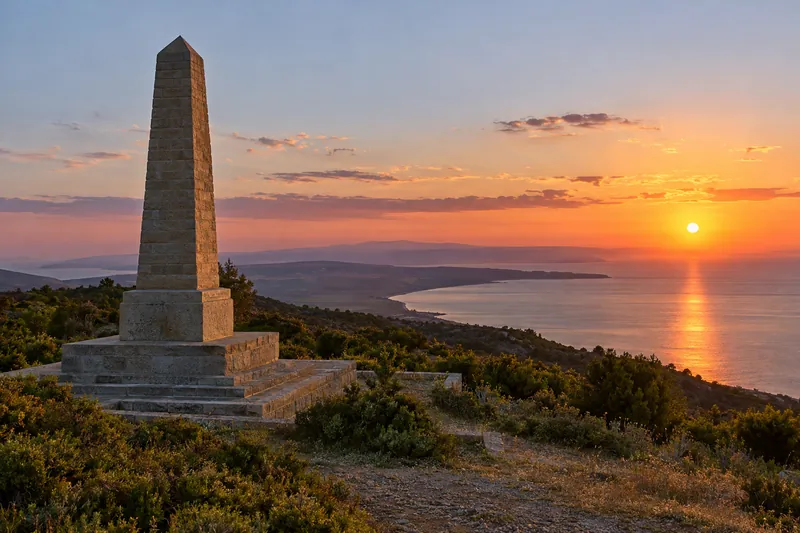
11-Day Private Turkey Tour: Gallipoli, Ephesus, Pamukkale, Cappadocia & Istanbul
Istanbul · Gallipoli · Troy · İzmir · Ephesus · Pamukkale
Includes: 4-star hotels · Entrance fees
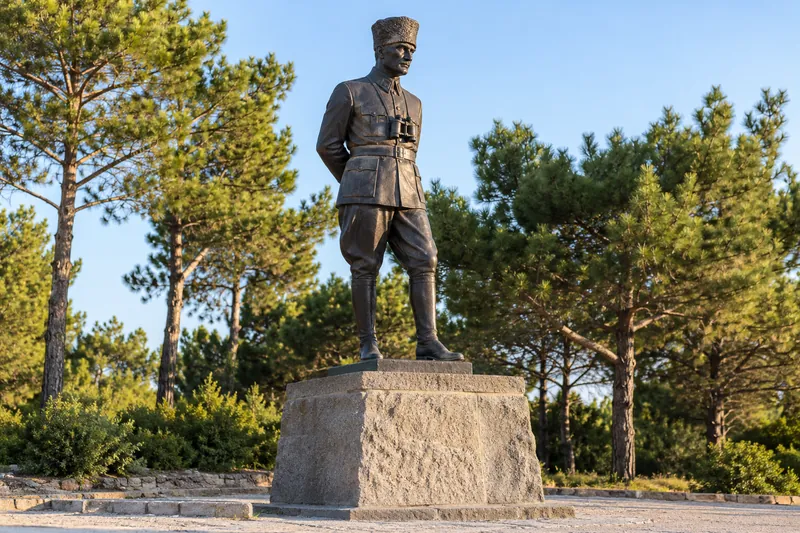
14-Day Private Grand Tour of Turkey: Istanbul, Gallipoli, Ephesus, Antalya & Cappadocia
Istanbul · Gallipoli · Troy · İzmir · Ephesus · Pamukkale
Includes: 4-star hotels · Entrance fees
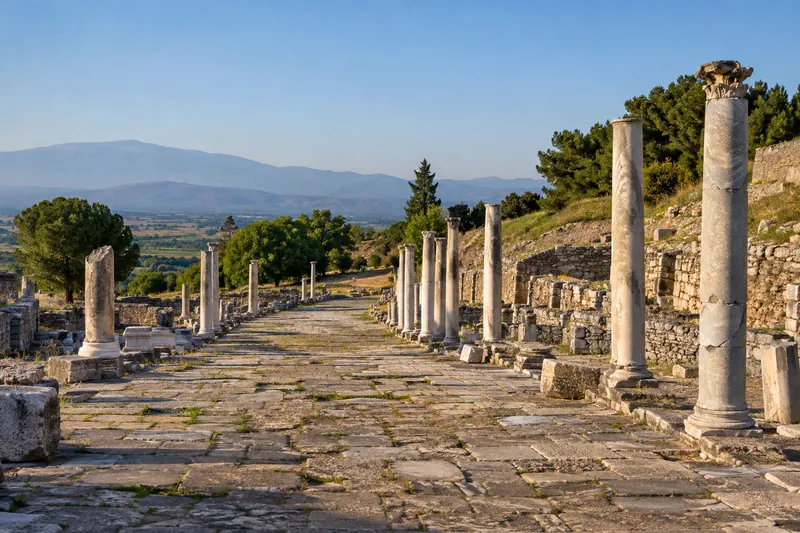
12-Day Private Turkey Tour: Istanbul, Troy, Pergamon, Ephesus, Pamukkale & Cappadocia
Istanbul · Troy · Pergamon · Ephesus · Kuşadası · Pamukkale
Includes: 4-star hotels · Entrance fees
More from the blog
All articles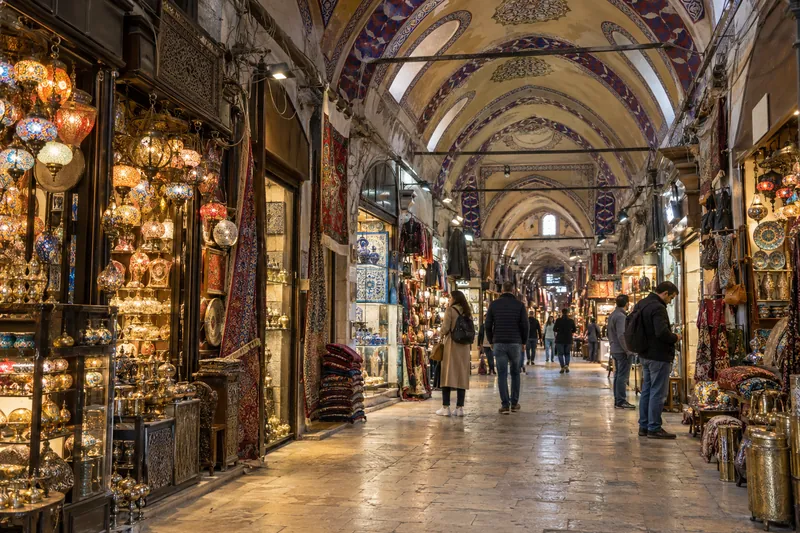
Turkey Itinerary Mistakes We See Most Often and How to Avoid Them
Ten common Turkey itinerary mistakes, from driving to Cappadocia to Tuesday at Topkapı, and the simple fix for each one.
 Evren SatırFounder, Turkey Itineraries · 7 min read
Antalya’s Ancient Cities in One Day: Perge, Aspendos and Side
The right order, driving times, October 2026 tickets and what to skip on a day trip to Perge, Aspendos and Side from Antalya.
 Osman DemirLicensed guide · 6 min read
Visiting Konya: Rumi’s Tomb, the Sema Ceremony and Seljuk Sites
Rumi's tomb, a real Saturday sema, Seljuk tilework and a plate of etli ekmek: how to spend a night in Konya between Cappadocia and Pamukkale.
 Bahar ÖzdemirLicensed guide · 7 min read