
Planning
Turkey for Older Travelers and Anyone with Limited Mobility

By Evren SatırFounder, Turkey Itineraries

Short answer: Turkey works well for older travelers and people with limited mobility if you plan the pace carefully. Choose fewer hotel changes, fly the long distances instead of driving them, keep afternoons free to rest, and pick sites and routes that match how far you can comfortably walk. Some highlights, like Cappadocia’s underground cities, are hard going; others, like the upper galleries of Hagia Sophia, are reached by a ramp rather than stairs.
Many of the US travelers who plan Turkey trips with us are in their fifties, sixties or older, and a common first question is the same: how much walking is involved, and can I manage it? The honest answer is that Turkey’s great sites were built long before anyone thought about step-free access. The good news is that a private tour gives you a lot of control over how you meet them.
This guide covers pacing, the sites that are easier and harder, medication and heat, insurance and hotels. It is general advice, not medical advice, so talk to your doctor about your own situation before you travel.
How should you pace a private tour?
Plan fewer bases, shorter touring days and at least one easy afternoon every two or three days. A slower plan that you enjoy is better than a full plan that wears you out by day four.
Here is what I suggest when we plan for older travelers:
- Fewer hotel changes. Packing, checking out and checking in take energy. Two or three nights in each base is far easier than a new hotel every night.
- Fly the long legs. The road from Istanbul to Cappadocia is roughly 730 km, a full day in a vehicle. The flight to Kayseri or Nevşehir takes about an hour and twenty minutes. The same logic applies between Cappadocia and the Aegean coast.
- Start early, stop early. Mornings are cooler and quieter at most sites. Many older travelers prefer to tour from breakfast to lunch and keep the afternoon for rest.
- Add a buffer day. An extra night after the long flight from the US helps with jet lag before the first full touring day.
If you are still deciding on trip length, our guide on how many days you need in Turkey shows realistic routes. For travelers with limited mobility, I would usually add two or three days to those plans rather than squeeze more into them.
Which sites are easier and which are harder?
Most major sites involve uneven ancient paving, slopes and steps, with limited shade. A few are much harder than they look on a map. The table gives a quick overview, and the sections below add detail.
| Site | Main challenge | What helps |
|---|---|---|
| Istanbul old city | Hills, cobblestones, crowds, security lines | Drop-offs close to entrances, short walking blocks |
| Hagia Sophia | Long stone ramp to the upper galleries | Take it slowly, with rests on the way up |
| Ephesus | Uneven marble, a sloping main street, little shade | Enter at the upper gate and walk downhill, early in the day |
| Pamukkale | Barefoot walking on wet, sometimes slippery travertine | View the terraces from the top without the full descent |
| Cappadocia underground cities | Low, narrow tunnels and steep steps | Skip them, or visit only the first level |
| Göreme Open Air Museum | Sloping paths and steps up to the rock churches | Choose a few churches rather than all of them |
Istanbul
The historic peninsula is hilly, and many streets around Sultanahmet and the bazaars are cobbled. Expect security lines and crowds at Hagia Sophia and Topkapı Palace. Mosques ask visitors to remove their shoes, so slip-on shoes save effort.
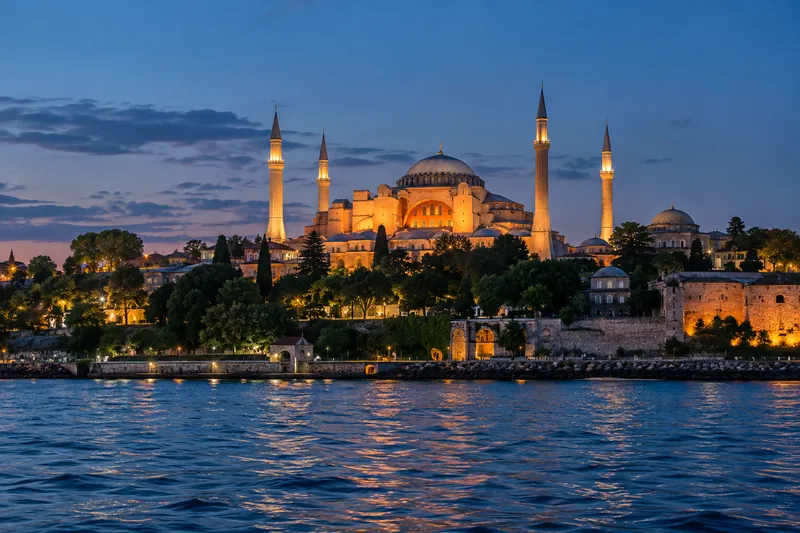
Inside Hagia Sophia, foreign visitors follow a route up to the upper galleries. You reach them by climbing a long, sloping stone ramp, not a staircase. It is gradual but steady, and the stone can be worn smooth, so take your time. Topkapı Palace covers a large area across several courtyards, and it is worth choosing which sections matter most to you.
Ephesus
Ephesus is long and mostly downhill if you enter at the upper gate and exit at the lower gate near the Great Theater. That direction is much easier than the reverse.
The surfaces are the real challenge. Curetes Street, the main slope, is paved with large, uneven marble blocks that can be slippery, and there is little shade. Wheelchair users have reported that parts of the site can be seen from both entrances, but that the middle stretch is rough and steep. On a private tour, your driver can drop you at the upper gate and collect you at the lower one. Our Ephesus guide has more detail on the layout.
Pamukkale
Shoes are not allowed on the travertine terraces, so the classic walk down the white slope is done barefoot or in socks, on a surface that is wet and in places ridged or slippery. For anyone unsteady on their feet, that walk is the riskiest part of the visit.
You do not have to do it. You can enter from the top of the plateau, walk the paved paths of Hierapolis and look over the terraces from above, perhaps stepping onto the first few meters to feel the water. See our Pamukkale guide for how the site is laid out.
Cappadocia
The underground cities, such as Derinkuyu and Kaymaklı, have low, narrow passages and steep steps between levels. They are hard for anyone with knee, hip or back problems, and unsuitable for anyone uneasy in tight spaces. You can see a great deal of Cappadocia without them.
The Göreme Open Air Museum has sloping paths and steps up to several of the rock-cut churches. Pick two or three churches and skip the rest. Valley viewpoints, the pottery town of Avanos and panoramic stops are easy to enjoy from near the vehicle. A balloon flight is possible for many older travelers, but climbing into and out of the basket takes some agility, so check with the operator first. Our Cappadocia guide covers the main areas.
What about wheelchair users?
Turkey is possible in a wheelchair, but it takes planning. The US State Department notes that access to buildings and public transportation for people with disabilities is limited in most Turkish cities, while airports and metro stations are typically accessible.
At the sites themselves, expect partial access. You will usually be able to see key monuments from a paved or smoother section, but not reach every corner. Tell us the type of chair, whether it folds, and whether you can manage a few steps, so we can plan the vehicle, the hotels and the drop-off points around it.
Medication, heat and health
Bring enough medication for the whole trip plus a few extra days, in original packaging, with copies of your prescriptions and a letter from your doctor. Check before you go whether any of your medicines are restricted in Turkey.
This matters more than many people realize. The US State Department warns that some common US prescription and over-the-counter medicines can be illegal in Türkiye, including some opioid painkillers, benzodiazepines, ADHD stimulants and cold medicines containing pseudoephedrine or codeine, and that travelers who need them should seek approval in advance. Keep medication in your carry-on bag, not in checked luggage.
Heat is the other big factor. July and August are hot at Ephesus, Pamukkale and other open sites, with little shade. Spring and autumn are much easier for walking. If you do travel in summer, tour early, rest in the middle of the day, drink water steadily, and wear a hat and light clothing.
Do you need travel insurance?
Yes. Buy a policy with medical cover and medical evacuation before you go.
The US State Department points out that Medicare and Medicaid do not cover medical expenses abroad, and that most US health plans do not either. It strongly recommends supplemental insurance that includes medical evacuation. Read the policy’s rules on pre-existing conditions carefully, and declare everything you are asked about.
Choosing the right hotels
Ask for a hotel with an elevator and a room on a low floor or near the elevator. It sounds obvious, but it is not guaranteed.
Cappadocia’s cave hotels are a good example. Many are built into hillsides, with stone stairs between terraces and no elevator. Some have rooms at street level, and some do not. Historic boutique hotels in Istanbul can also be narrow and stepped. When we plan for travelers with limited mobility, we ask hotels directly about steps, elevators, walk-in showers and grab bars rather than relying on photos.
Tell us in advance
The single most useful thing you can do is tell us early. Let us know about any cane, walker or wheelchair, how far you can comfortably walk, any trouble with steps, heat or tight spaces, and any dietary or medical needs that affect the day.
With that information, your guide can choose routes, entrances and the order of visits, and your driver can plan drop-off points. None of it needs to be awkward; it simply makes the trip work. When you are ready, you can share your dates and needs through our build your trip page and we will plan the pace around you.
Sources
- US State Department: Türkiye international travel information
- Lonely Planet: Hagia Sophia entry rules for visitors
- Sage Traveling: Ephesus wheelchair access review
- Süleyman Demirel University: Accessible tourism study of Göreme Open Air Museum
- UNESCO: Hierapolis-Pamukkale
- Istanbul to Cappadocia by road and air
FAQ
Is Turkey a good destination for seniors?
Yes, if the trip is paced well. Choose fewer hotel changes, fly long distances such as Istanbul to Cappadocia, tour in the mornings and rest in the afternoons. Expect uneven ancient paving, slopes and steps at most sites. A private tour lets your guide choose easier routes and your driver drop you close to entrances.
Is Ephesus hard to walk for older travelers?
It can be. The main street is paved with large, uneven marble blocks on a slope, with little shade. Entering at the upper gate and walking downhill to the lower gate is much easier than the reverse. Visit early in the day, wear shoes with good grip, and take breaks where you can.
Do you have to walk barefoot at Pamukkale?
Shoes are not allowed on the travertine terraces, so walking down them means going barefoot or in socks on a wet surface that can be slippery or ridged. You can skip that walk. Enter from the top of the plateau, follow the paved paths of Hierapolis and view the terraces from above.
Can people with limited mobility visit Cappadocia's underground cities?
They are difficult. Underground cities such as Derinkuyu and Kaymaklı have low, narrow tunnels and steep steps between levels, which are hard on knees, hips and backs and unsuitable for anyone uneasy in tight spaces. Many travelers skip them and enjoy valley viewpoints, Avanos and a few rock churches instead.
Does Medicare cover me in Turkey?
No. The US State Department notes that Medicare and Medicaid do not cover medical bills abroad, and most US health plans do not either. Buy travel insurance with medical cover and medical evacuation before you go, and check the policy's rules on pre-existing conditions carefully so you are covered for what matters.
Summarize this post with an AI assistant
Private tours that go there
Every tour runs with your own licensed guide and vehicle, and every one can be adjusted.
7-Day Private Turkey Highlights Tour: Istanbul, Cappadocia, Ephesus & Pamukkale
Istanbul · Cappadocia · Ephesus · Pamukkale · Kuşadası
Includes: 4-star hotels · Domestic flights · Entrance fees

8-Day Private Turkey Tour: Istanbul, Cappadocia, Ephesus & Pamukkale
Istanbul · Cappadocia · Ephesus · Pamukkale · Kuşadası
Includes: 5-star hotels · Domestic flights
8-Day Private Turkey Tour Package: Istanbul, Cappadocia, Konya, Pamukkale & Ephesus
Istanbul · Cappadocia · Konya · Pamukkale · Ephesus · Kuşadası
Includes: 4-star hotels · Domestic flights · Entrance fees
More from the blog
All articles
Turkey Itinerary Mistakes We See Most Often and How to Avoid Them
Ten common Turkey itinerary mistakes, from driving to Cappadocia to Tuesday at Topkapı, and the simple fix for each one.
Evren SatırFounder, Turkey Itineraries · 7 min read
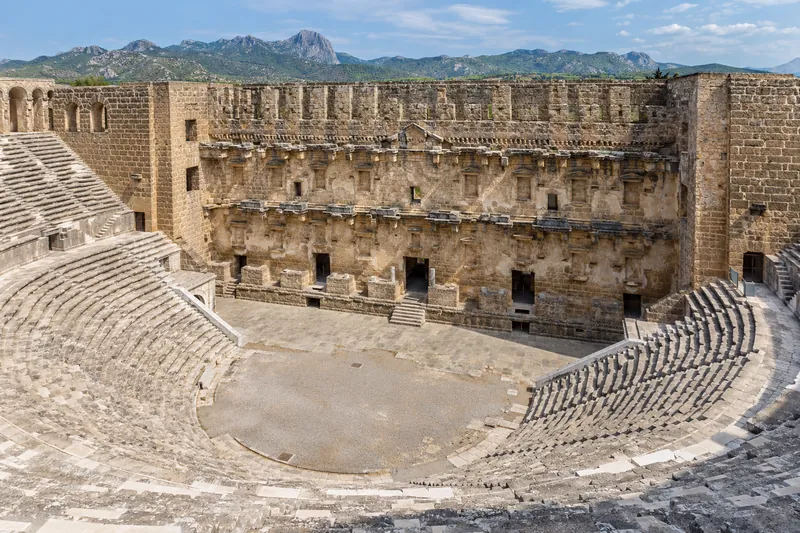
Antalya’s Ancient Cities in One Day: Perge, Aspendos and Side
The right order, driving times, October 2026 tickets and what to skip on a day trip to Perge, Aspendos and Side from Antalya.
 Osman DemirLicensed guide · 6 min read
Visiting Konya: Rumi’s Tomb, the Sema Ceremony and Seljuk Sites
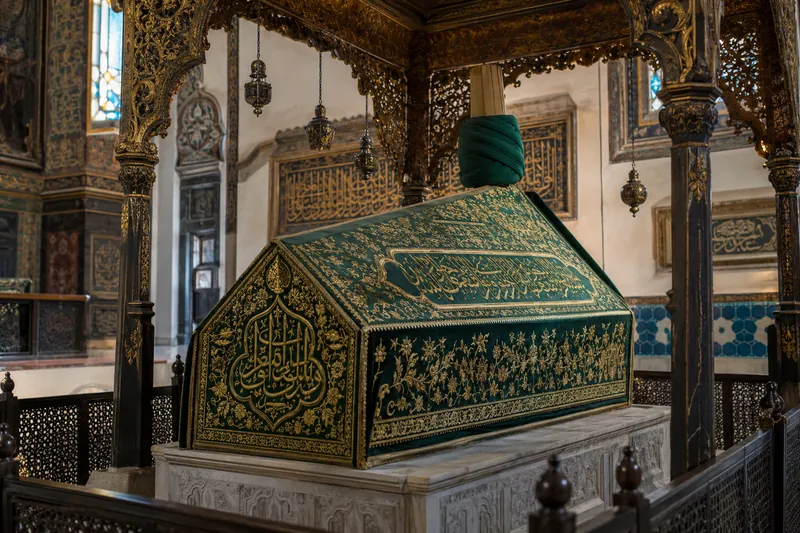
Rumi's tomb, a real Saturday sema, Seljuk tilework and a plate of etli ekmek: how to spend a night in Konya between Cappadocia and Pamukkale.
 Bahar ÖzdemirLicensed guide · 7 min read