
Faith travel
Paul in Ephesus: Reading Acts 19 on Site, Stop by Stop
By Can AteşLicensed national guide · 15 years
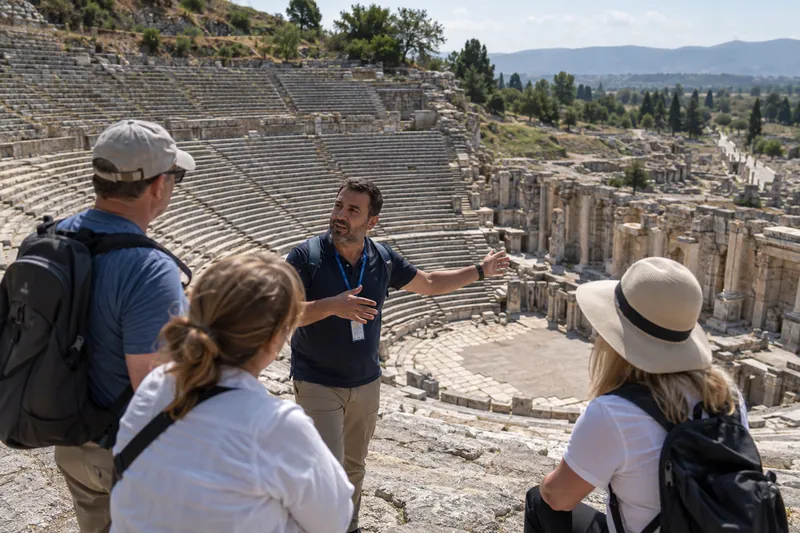
Short answer: You can read Acts 19 almost street by street in Ephesus. The riot of Demetrius the silversmith ended in the Great Theater, which still stands at the foot of Mount Pion, and the Harbor Street that runs from it toward the old port is the road Paul’s companions would have known. Plan a full day: the ancient city in the morning, then the Temple of Artemis site, the Basilica of St. John and the House of the Virgin Mary.
Why does Ephesus matter in Paul’s story?
Ephesus is where Paul stayed longer than in any other city on his missionary journeys. Acts records about three months in the synagogue, then two years teaching daily in the hall of Tyrannus (Acts 19:8-10), and Paul later reminded the Ephesian elders that he had warned them “by the space of three years” (Acts 20:31, KJV).
It was also a major port and the home of the Temple of Artemis, one of the Seven Wonders of the ancient world. That combination of commerce and religion is the backdrop for the riot in Acts 19. When you stand in the city, the logic of the story becomes clear: a booming trade in silver shrines for the goddess, a crowded theater, and a town clerk anxious about Roman authority.
Ephesus was also the place Paul wrote from. In 1 Corinthians 16:8-9 (KJV) he says, “I will tarry at Ephesus until Pentecost. For a great door and effectual is opened unto me, and there are many adversaries.” Reading that line on site, with the theater in front of you, is a good way to start the day.
What happened in the Great Theater riot?
The riot of Acts 19 ended in the Great Theater, and you can sit in it today. Demetrius gathered the craftsmen who made “silver shrines for Diana” (Acts 19:24, KJV), the crowd seized Gaius and Aristarchus, and “they rushed with one accord into the theater” (Acts 19:29).
The theater was built in the Hellenistic period and enlarged several times under Roman emperors. Estimates of its capacity range from about 17,000 to 25,000 spectators, so it was the obvious place for a city-wide assembly. Acts says the crowd shouted “Great is Diana of the Ephesians” for about two hours (Acts 19:34) before the town clerk calmed them and dismissed the assembly (Acts 19:41).
On our faith tours I usually suggest reading Acts 19:23-41 aloud from the upper seats, where the noise of the site drops away and you can see down the Harbor Street. Climb carefully: the stone steps are high and uneven, and there is no handrail on most of the cavea.
The Harbor Street and the lost port
The Harbor Street (Arcadian Way) runs from the theater toward where the harbor used to be. It is about 530 meters long and 11 meters wide, and it takes its name from Emperor Arcadius (395 to 408 AD), who restored it.
The street you walk is therefore later than Paul’s time, but it follows the city’s main link between the theater and the sea. Paul arrived and left by water, and the silted harbor explains why the coast is now several kilometers away. Acts 20 has him sailing past Ephesus and calling the elders down to Miletus instead (Acts 20:16-17), where “they all wept sore” and “accompanied him unto the ship” (Acts 20:37-38).
Near the harbor end, off to the right, are the ruins of the Church of Mary, associated with the Council of Ephesus in 431. UNESCO notes that two important church councils met in Ephesus, in 431 and 449.
The Temple of Artemis site
Very little survives of the temple that Demetrius feared would be “despised” (Acts 19:27), but the site is worth a short stop. It lies on the edge of Selçuk, below Ayasuluk Hill, and today you see a marshy field, scattered foundations and a single re-erected column.
UNESCO describes it as one of the Seven Wonders that drew pilgrims from across the Mediterranean. Fifteen minutes is enough. It helps visitors understand what the town clerk meant when he called Ephesus “a worshipper of the great goddess Diana” (Acts 19:35).
The large statues of Artemis themselves are in the Ephesus Museum in Selçuk, a short drive away. If you have an hour, the museum’s Artemis halls make the Acts 19 story concrete.
The Basilica of St. John and the tradition of John in Ephesus
Early Christian tradition holds that the apostle John lived and was buried in Ephesus, and the Basilica of St. John marks the traditional site of his tomb. Emperor Justinian built the basilica in the 6th century, replacing a smaller 4th-century church over the tomb.
The ruins sit on Ayasuluk Hill in Selçuk, next to the 14th-century İsa Bey Mosque, about 3.5 kilometers from the ancient city. You can walk the outline of the nave, see the marked tomb area and the octagonal baptistery on the north side.
This is also where I like to read the letter to the church in Ephesus, Revelation 2:1-7. The risen Christ praises the church’s labor and patience, then says, “Nevertheless I have somewhat against thee, because thou hast left thy first love” (Revelation 2:4, KJV). Ephesus is the first of the Seven Churches of Revelation, and for many groups it is the start of a longer route; our Seven Churches guide covers the other six.
Did Mary live in Ephesus? The House of the Virgin Mary
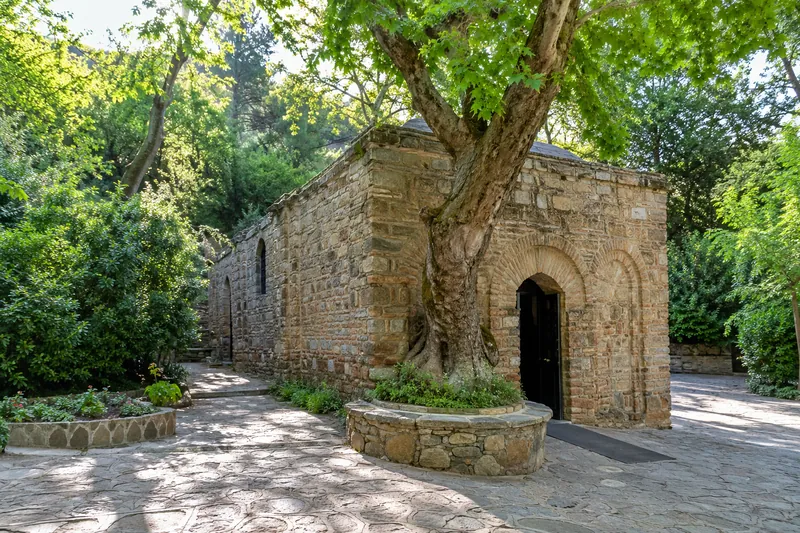
The House of the Virgin Mary (Meryem Ana Evi) is a small stone chapel on Mount Koressos, about seven kilometers from Ephesus, that many Catholics and Muslims venerate as Mary’s last home. The tradition rests on John 19:27 and on the belief that John brought Mary to Ephesus.
The modern identification of the site came from the visions of Anne Catherine Emmerich, a German nun of the early 19th century, as published by Clemens Brentano. Lazarist missionaries from İzmir located the building in 1891, and Pope Leo XIII blessed the first pilgrimage in 1896.
The Catholic Church has never ruled on the house’s authenticity, but three popes have visited: Paul VI in 1967, John Paul II in 1979 and Benedict XVI in 2006. A ceremony for the Feast of the Assumption is held there each year on August 15. Outside, pilgrims tie written prayers to a wishing wall and fill bottles at the spring fountains.
I tell guests plainly: this is a place of tradition and devotion, not an archaeological proof. That honesty does not make the visit less moving. The chapel is quiet, shaded by trees, and a fitting place to pray.
How do you plan a one-day faith route in Ephesus?
Start early at the upper gate of Ephesus and walk downhill, then do the Selçuk sites after lunch. Here is the order I suggest:
| Stop | What to read or see | Time |
|---|---|---|
| House of the Virgin Mary | John 19:25-27; quiet prayer | 45 min |
| Ephesus upper gate to Curetes Street | Ephesians 2:19-22 near the civic buildings | 45 min |
| Terrace Houses (optional) | Roman homes of Paul’s era and later | 45 to 60 min |
| Library of Celsus area | Acts 19:18-20 (the burned books of magic) | 20 min |
| Great Theater | Acts 19:23-41 | 30 min |
| Harbor Street | Acts 20:17-38, Paul’s farewell | 15 min |
| Temple of Artemis site | Acts 19:27, 35 | 15 min |
| Basilica of St. John | Revelation 2:1-7 | 45 min |
The House of the Virgin Mary sits on the road to the upper gate, so visiting it first saves driving. Allow seven to eight hours in total, with lunch in Selçuk. If you have a second day, add the Ephesus Museum, or continue to Smyrna, Pergamum and Sardis on a Seven Churches route from İzmir.
Practical tips for a faith-focused visit
Ephesus is hot and exposed for much of the year, so timing matters more than almost anything else. Spring and autumn are the most comfortable months; see our month-by-month guide.
- Tickets: As of October 2026 the official museum page lists Ephesus as open daily from 08:00 to 18:00, with the ticket office closing at 17:45. The Terrace Houses, Basilica of St. John and the Ephesus Museum are separate tickets. Prices change often, so check the Ministry of Culture’s site before you go.
- Footwear: The marble paving on Curetes Street is polished and slippery. Wear shoes with grip.
- Bring your Bible: A small printed Bible or a phone app works. Readings carry better in the early morning, before the cruise crowds arrive.
- Dress: No dress code applies at the ruins. For the House of the Virgin Mary, covered shoulders are respectful.
- Mobility: The lower section around the theater and library is the flattest part. Walking downhill from the upper gate is easier than the reverse.
For more detail on the ancient city itself, see our Ephesus guide. If you are planning a church or family group, Ephesus fits naturally into the 10-Day Private Seven Churches Tour with Istanbul and Cappadocia, and our church group page explains how we handle larger parties.
Sources
- Acts 19, King James Version
- UNESCO World Heritage Centre: Ephesus
- Republic of Türkiye Ministry of Culture and Tourism: Ephesus Archaeological Site
- Ancient Theater Archive: Theater of Ephesus
- UCLA: The Arcadian Street of Ephesus
- Basilica of St. John (overview)
- House of the Virgin Mary (overview)
FAQ
Where did the riot of Acts 19 take place in Ephesus?
Acts 19:29 says the crowd rushed into the theater. That is the Great Theater of Ephesus, which still stands at the end of the Harbor Street on the slope of Mount Pion. It seated somewhere between about 17,000 and 25,000 people, and visitors can sit in it and read the passage on site.
How long did Paul stay in Ephesus?
Acts describes about three months teaching in the synagogue and then two years in the hall of Tyrannus (Acts 19:8-10). In his farewell to the Ephesian elders at Miletus, Paul speaks of three years in the city (Acts 20:31). It was his longest stay in any city during his missionary journeys.
Is the House of the Virgin Mary really where Mary lived?
It is a tradition, not a proven fact. The site was identified in 1891 using the published visions of Anne Catherine Emmerich, and the Catholic Church has never ruled on its authenticity. Popes Paul VI, John Paul II and Benedict XVI have visited, and both Christians and Muslims come to pray there.
How much time do I need for a faith-focused visit to Ephesus?
Plan one full day of seven to eight hours. That covers the House of the Virgin Mary, the ancient city from the upper gate to the theater and Harbor Street, the Temple of Artemis site and the Basilica of St. John. Add a second half day for the Ephesus Museum in Selçuk if you can.
Where is the apostle John said to be buried?
Tradition places John's tomb on Ayasuluk Hill in Selçuk, about 3.5 kilometers from the ancient city. Emperor Justinian built the Basilica of St. John over the site in the 6th century, replacing an earlier church. The ruins and the marked tomb area are open to visitors with a separate ticket.
Summarize this post with an AI assistant
Private tours that go there
Every tour runs with your own licensed guide and vehicle, and every one can be adjusted.
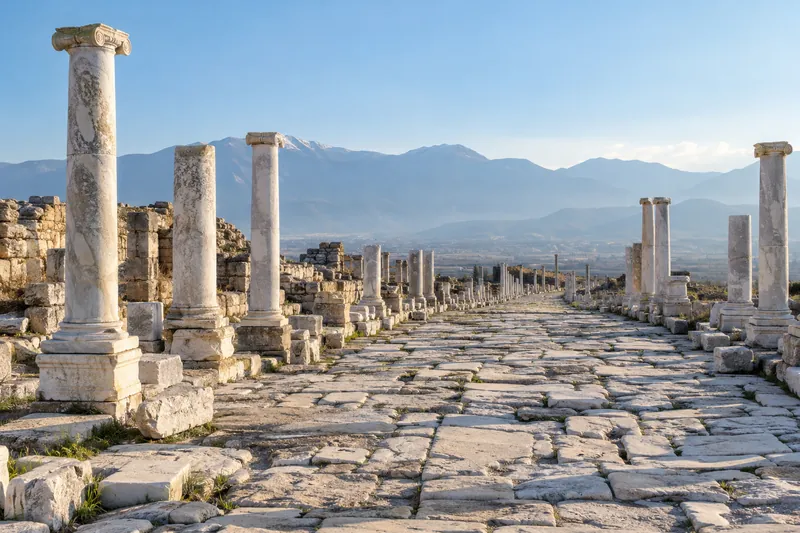
5-Day Private Seven Churches of Revelation Tour from İzmir
Seven Churches of Revelation · İzmir · Pergamon · Sardis · Philadelphia (Alaşehir) · Laodicea
Includes: 4-star hotels · Entrance fees
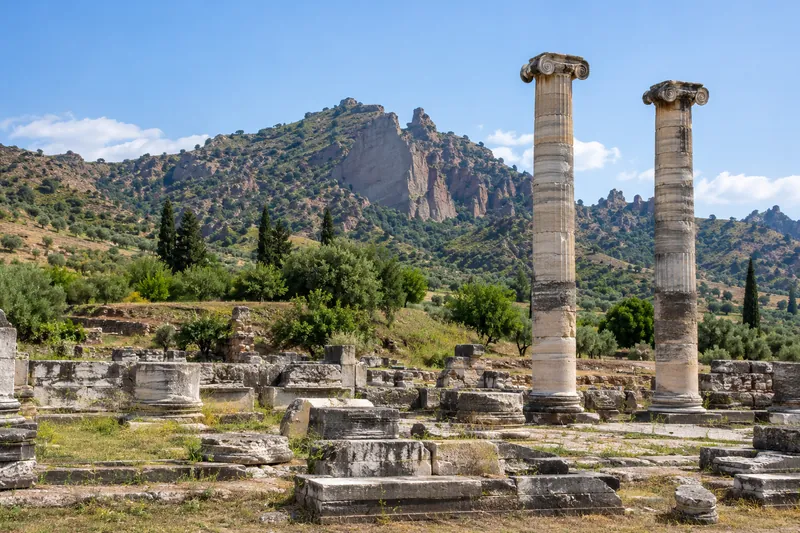
5-Day Private Seven Churches of Revelation Tour from Istanbul
Seven Churches of Revelation · İzmir · Pergamon · Sardis · Philadelphia (Alaşehir) · Laodicea
Includes: 4-star hotels · Domestic flights · Entrance fees
10-Day Private Seven Churches Tour with Istanbul & Cappadocia
Istanbul · Cappadocia · Seven Churches of Revelation · İzmir · Pergamon · Sardis
Includes: 4-star hotels · Domestic flights · Entrance fees
More from the blog
All articles
Turkey Itinerary Mistakes We See Most Often and How to Avoid Them
Ten common Turkey itinerary mistakes, from driving to Cappadocia to Tuesday at Topkapı, and the simple fix for each one.
 Evren SatırFounder, Turkey Itineraries · 7 min read
Antalya’s Ancient Cities in One Day: Perge, Aspendos and Side
The right order, driving times, October 2026 tickets and what to skip on a day trip to Perge, Aspendos and Side from Antalya.
 Osman DemirLicensed guide · 6 min read
Visiting Konya: Rumi’s Tomb, the Sema Ceremony and Seljuk Sites
Rumi's tomb, a real Saturday sema, Seljuk tilework and a plate of etli ekmek: how to spend a night in Konya between Cappadocia and Pamukkale.
 Bahar ÖzdemirLicensed guide · 7 min read